

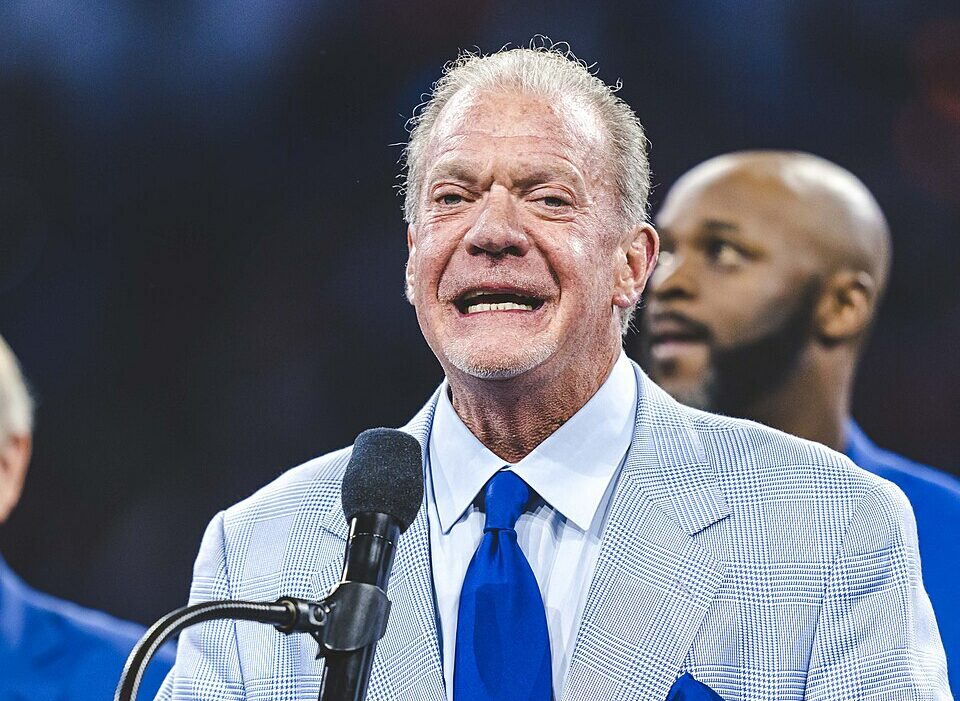
Federal authorities are reportedly investigating the circumstances surrounding the death of longtime Indianapolis Colts owner Jim Irsay, including the role of a physician who prescribed him pain medication and ketamine in the period leading up to his passing in the spring of 2025.
According to information obtained by The Washington Post, the FBI served federal grand jury subpoenas earlier in January seeking records related to Irsay’s death, his alleged use of both illicit and prescription drugs, and his relationship with Dr. Harry Haroutunian, a California-based addiction specialist. Court records and individuals familiar with the investigation confirmed the subpoenas, and federal investigators also spent several days in Indianapolis earlier this month as part of the probe.
Colts Chief Legal Officer Dan Emerson acknowledged the subpoenas in a brief statement but said neither he nor the organization had been directly contacted. “I do understand that there have been some subpoenas provided, but not to me, the Colts or any of our current employees,” Emerson told the outlet on Thursday. He declined to offer further comment on the matter.
Irsay, who became owner of the Colts in 1997, died in May at the age of 65. The death certificate, which was signed by his private physician, listed cardiac arrest as the cause of death. No autopsy was conducted.
The investigation appears to be focused in part on Irsay’s long-documented struggles with substance abuse. The former NFL executive had spoken publicly for years about his addiction issues. A Washington Post report published in August said Irsay experienced a relapse during the final two years of his life.
That report also indicated that Irsay had been working with Dr. Haroutunian during that period. Haroutunian allegedly prescribed ketamine to Irsay, a drug that has increasingly come under scrutiny amid broader concerns about misuse and overprescription.
According to the Post, Haroutunian also allegedly prescribed more than 200 opioid pills to Irsay in the lead-up to two overdoses in December 2023. One of those incidents occurred at Irsay’s home in Indianapolis, while the other took place at a rental property in Miami. Those overdoses reportedly heightened concerns among people close to Irsay about the treatment he was receiving.
Sources told the Post that friends and associates of Irsay had grown increasingly alarmed by the care provided by Haroutunian, questioning whether the approach was helping or worsening the situation. Those concerns are now part of what federal investigators are examining as they review the circumstances of Irsay’s final months.
Haroutunian was residing at the Beverly Hills Hotel at the time of Irsay’s death, which also occurred at that location, according to the report. The nature of their professional relationship and the prescriptions issued are key elements of the ongoing investigation.
At this stage, authorities have not announced any charges, and the scope of the probe remains unclear. The FBI has not publicly commented on the investigation, and no wrongdoing has been formally alleged by prosecutors.
The case adds to growing national scrutiny over prescription practices involving powerful medications, particularly opioids and ketamine, and the responsibilities of medical professionals treating high-profile patients with known addiction histories. As the investigation continues, questions remain about how Irsay was treated medically in his final years and whether proper safeguards were followed.