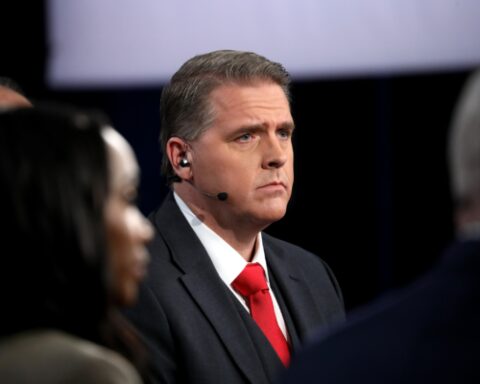

Former Chairman of the Joint Chiefs of Staff Mike Mullen voiced concern Sunday that the growing confrontation with Iran could evolve into a prolonged conflict, warning that history offers sobering lessons about how quickly military operations can expand and how slowly they sometimes end.
Speaking with ABC News host Martha Raddatz on “This Week,” Mullen said the situation unfolding in the Middle East carries significant risks not only for American forces but also for global stability.
“We’ve got friends and allies out there,” Mullen said. “We’ve got the economy of the world, in great part, depending on the open waters at the Strait of Hormuz and how markets react to this.”
The retired admiral pointed out that the region’s economic activity has already been severely disrupted as tensions continue to escalate.
“You’ve got a tourism, economic — livelihood in the region that’s actually completely stopped right now,” he added.
Mullen said the broader consequences of the conflict are difficult to predict, particularly given how complex the Middle East can be when military action begins to unfold.
“So, there’s an awful lot in play that we can’t anticipate,” he said.
The former military leader also referenced the experiences of the past two decades, noting that American conflicts in Iraq and Afghanistan began with clear objectives but ultimately stretched far longer than many initially expected.
“Certainly, that was the case in Iraq and Afghanistan,” Mullen said. “And I worry about this getting drawn out. These wars just don’t end quickly. At least, they certainly haven’t in the last several decades.”
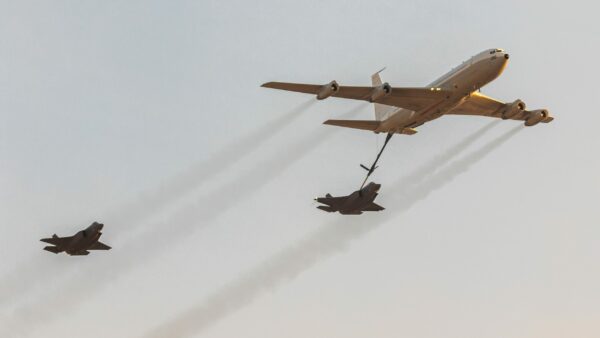
His remarks come as the United States and Israel continue their joint military campaign against Iran. The strikes began last week following weeks of rising tensions between Washington and Tehran.
Iran quickly responded by launching attacks of its own, targeting Israel as well as several Gulf states, including Qatar and Saudi Arabia.
The growing confrontation has already taken a human toll. U.S. Central Command announced Sunday that a seventh American service member has died as a result of the fighting.
According to Centcom, the service member died from injuries sustained during Iran’s initial wave of retaliatory attacks across the Middle East earlier this month.
The command said the service member had been “seriously wounded at the scene” of an Iranian attack in Saudi Arabia that targeted U.S. troops.
The latest death adds to the rising list of casualties tied to the conflict, underscoring the reality that even limited military operations can carry significant costs.
Meanwhile, Iranian officials are continuing to signal that further retaliation could follow.
On Saturday, Iranian Foreign Minister Abbas Araghchi issued a warning directed at the United States, suggesting that escalation would be met with additional military response.
“If [President Trump] seeks escalation, it is precisely what our Powerful Armed Forces have long been prepared for, and what he will get,” Araghchi wrote in a post on X.
He added that responsibility for any further intensification of the conflict would rest with Washington.
“Responsibility for any intensification of Iran’s exercise of self-defense will lie squarely with the U.S. administration,” Araghchi said.
As the conflict continues to develop, voices like Mullen’s highlight the difficult balance facing policymakers. Military force can sometimes achieve rapid tactical results, but the long-term consequences are rarely as predictable.
With American lives already lost and tensions continuing to rise, the question now facing leaders is not only how the current conflict unfolds, but whether it becomes another drawn-out chapter in the long history of Middle East wars.
[READ MORE: Condoleezza Rice Seen Visiting White House as Trump Administration Confronts Iran]