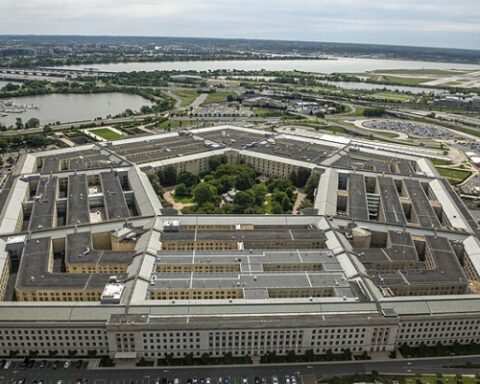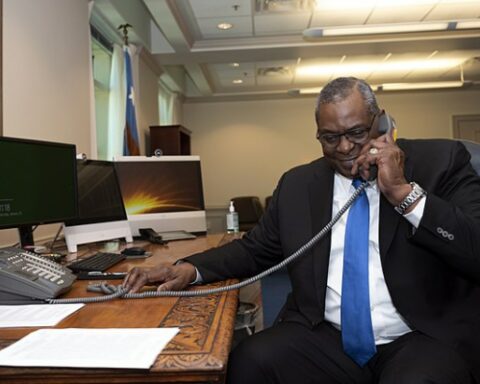


Tensions surrounding U.S. policy toward Iran reportedly took center stage at the Pentagon on Tuesday, where a pointed exchange highlighted the difficult balance between military pressure and the potential human cost of escalation.
Fox News senior foreign policy correspondent Gillian Turner challenged Defense Secretary Pete Hegseth over recent remarks from Donald Trump suggesting the United States could target Iran’s critical infrastructure, including power plants, oil facilities, and water systems. Turner pressed officials on whether such actions could be carried out without “seriously harming civilians,” a question that cuts to the core of modern warfare.
The exchange came during a press conference that included Dan Caine, as the administration continues to signal both openness to negotiations and readiness for military action. Turner also raised uncertainty over whether diplomatic talks between the U.S. and Iran are truly underway, noting conflicting public signals from both sides.
Hegseth responded by emphasizing that discussions are, in fact, ongoing and gaining traction. He pointed to recent high-level engagement involving senior administration officials, suggesting that diplomacy remains the preferred path forward.
“At the end of the day, we would much prefer to get a deal,” Hegseth said, adding that the goal is for Iran to relinquish certain materials and ambitions through negotiation. Still, his remarks underscored a more forceful posture, noting that the U.S. is prepared to apply pressure if talks fail. “We’ll negotiate with bombs,” he said, framing military capability as leverage rather than an end in itself.
That formulation, while blunt, reflects a broader strategy that has become increasingly familiar: diplomacy backed by the credible threat of force. Yet it also raises deeper questions about how far such pressure can go before it crosses into actions that risk widespread civilian suffering.
General Caine, addressing Turner’s question about potential strikes on infrastructure, said the military routinely considers such risks and works to mitigate harm in line with established practices. “We’re always thinking about those considerations,” he said, pointing to standard procedures aimed at reducing unintended consequences.
Still, concerns about the human impact of such operations are not hypothetical. In a recent statement, retired Army General Wesley Clark warned that targeting infrastructure like power plants could be viewed as a “war crime,” noting that such facilities primarily serve civilian populations. “You cannot destroy civilian assets in an effort to put harm on the population,” Clark said.
The debate intensified after Trump issued a warning on social media, threatening to “completely obliterate” key elements of Iran’s infrastructure if a deal is not reached and if shipping through the Strait of Hormuz is not restored. He framed the potential action as retaliation for past attacks on American forces, while also suggesting that the U.S. has so far held back from striking those targets.
For many observers, the moment illustrates a familiar and uneasy dynamic: the push for peace through strength, paired with the sobering reality that modern conflicts rarely remain confined to military targets alone. Even when framed as deterrence, the destruction of essential infrastructure carries risks that extend far beyond the battlefield.
As negotiations continue, officials insist that a deal remains the primary objective. But the sharp questions raised at the Pentagon serve as a reminder that the cost of failure—measured not just in strategy, but in human consequences—remains a central concern in any path forward.
[READ MORE: Trump Signals Openness to Replacing Surgeon General Pick as Concerns Mount]