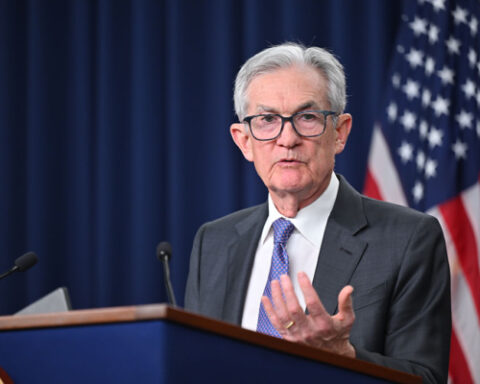


A federal judge on Friday delivered a firm rebuke to the Justice Department, refusing to reconsider his earlier decision blocking subpoenas aimed at the Federal Reserve and its chairman, Jerome Powell—a move that is likely to intensify an already high-stakes clash between the central bank and the Trump administration.
U.S. District Judge James Boasberg, the chief judge of Washington’s federal trial court, made clear that the government had fallen well short of meeting the legal standard required to revisit his prior ruling. In his decision, Boasberg said the Justice Department “did not come close” to persuading the court that the subpoenas—targeting records tied to a $2.5 billion renovation project—were justified.
At the heart of the dispute is a broader question about the appropriate use of federal investigative authority. Boasberg emphasized that while subpoena power is a critical tool, it is not without limits. In his six-page ruling, the judge pointed to what he described as “abundant evidence” suggesting the subpoenas were not purely investigative, but instead part of a broader effort to pressure Powell, who has been a frequent target of criticism from President Donald Trump.
“The subpoena power is not unlimited and may not be abused,” Boasberg wrote, underscoring concerns that legal tools meant for legitimate oversight can, if misused, blur into political leverage.
The Justice Department’s investigation into the Federal Reserve stems from a costly renovation of its headquarters. The project, initially estimated at $1.9 billion, eventually rose to $2.5 billion due to design changes, rising costs, and what officials described as unforeseen conditions. Powell had testified before Congress about the need for the upgrades, which involve the Marriner S. Eccles building and the Federal Reserve Board East building.
Still, Boasberg’s ruling suggests that the government failed to demonstrate a clear, good-faith basis for suspecting criminal wrongdoing tied to the project. Instead, the judge raised concerns about the underlying intent of the subpoenas, noting that the court had to determine whether their “dominant purpose” was a legitimate investigation or an attempt to influence Powell’s decisions on interest rates—or even push him toward resignation.
That distinction proved critical. Boasberg wrote that the government leaned heavily on arguments about its broad authority to issue subpoenas but failed to address the more fundamental issue of whether it had sufficient evidence to justify their use in this case.
“The Government has missed this distinction,” he wrote, pointing out that a lack of a good-faith basis to suspect a crime is relevant when evaluating whether investigative powers are being used appropriately.
The ruling has drawn sharp criticism from federal prosecutors. Jeanine Pirro, the U.S. attorney for the District of Columbia, previously blasted the decision, accusing the judge of undermining the grand jury’s ability to conduct its work. Following Friday’s development, a spokesperson for Pirro said the office plans to appeal, signaling that the legal battle is far from over.
The dispute is unfolding alongside another significant legal question facing the Federal Reserve. The Supreme Court is currently weighing whether President Trump had the authority to fire Lisa Cook, a member of the Fed’s board of governors, despite longstanding protections designed to shield the central bank from political pressure.
Taken together, the cases highlight a growing tension over the independence of key institutions and the reach of executive authority—an issue that continues to reverberate far beyond the courtroom.