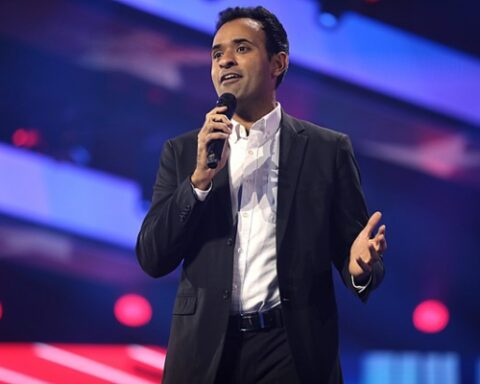

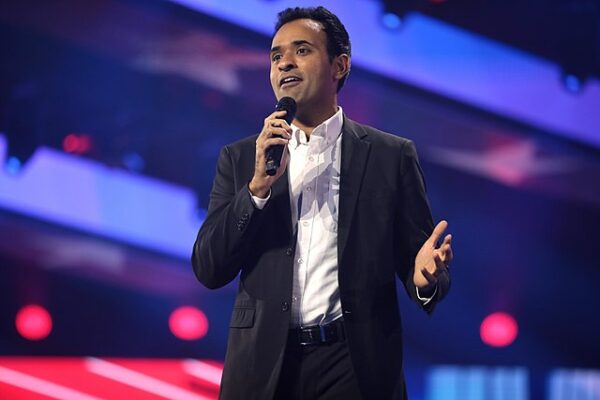
A newly released poll from Bowling Green State University underscores just how competitive the race for Ohio governor is shaping up to be, with Republican frontrunner Vivek Ramaswamy and Democratic contender Amy Acton separated by a razor-thin margin.
The survey of 1,000 registered voters across the Buckeye State shows Ramaswamy with 48 percent support, narrowly edging Acton at 47 percent. Another 5 percent of respondents indicated they plan to support a different candidate, leaving the race effectively tied within the poll’s 3.9-point margin of error. With less than six months until Election Day, the numbers suggest a contest that could go down to the wire.
Ramaswamy, who previously sought the Republican presidential nomination in 2024, appears firmly in control of his party’s primary. Among 383 GOP respondents surveyed, more than three-quarters said they want him as the nominee. Businessman Casey Putsch and former school board president Heather Hill trailed far behind, each drawing 12 percent support. The data signals a largely unified Republican base heading into the general election, though not without some lingering divisions.
One notable detail from the poll highlights that divide: among Putsch supporters surveyed, nearly a quarter said they would still write his name in on the ballot in November if he does not secure the nomination. While more than half of that group said they would ultimately back Ramaswamy, a smaller share indicated they might shift to Acton or another candidate—or opt not to vote at all. In a race this close, even small pockets of dissent could carry outsized consequences.
On the Democratic side, Acton is running unopposed in the primary, which is scheduled for May 5. Early in-person voting began April 7 and continues through May 3, according to the office of Frank LaRose. That lack of intra-party competition could allow Acton to focus her efforts squarely on the general election, even as Republicans finalize their nominee.
The winner of the November contest will replace outgoing Gov. Mike DeWine, a two-term incumbent whose approval ratings in the poll appear notably subdued. Just 7 percent of respondents said they “strongly” approve of his performance, while about one-third expressed “somewhat” approval. More than half of those surveyed reported varying levels of disapproval, reflecting a restless electorate.
That sentiment is echoed in broader perceptions about the state’s direction. A plurality of respondents—46 percent—said Ohio is on the wrong track, compared to 35 percent who believe it is heading in the right direction, with 18 percent unsure. Such figures point to an electorate looking for change, a dynamic that both campaigns are seeking to tap into.
Economic concerns remain a central theme. According to the Missouri Economic Research and Information Center, Ohio ranked 23rd in cost of living in 2025—lower than Pennsylvania but higher than neighboring states like Michigan, Indiana, Kentucky, and West Virginia. Against that backdrop, both candidates have emphasized affordability and opportunity in their messaging.
Ramaswamy has framed his campaign around economic growth and upward mobility, calling for “continually lower costs, bigger paychecks, better schools” and invoking a broader vision tied to the nation’s 250th anniversary. Acton, meanwhile, has focused on addressing rising costs and tackling what she describes as corruption in Columbus, pledging to help hardworking Ohioans get ahead.
As the race tightens, the contrast between the candidates’ approaches—and the mood of an electorate signaling dissatisfaction—suggests a high-stakes contest where every vote will matter.