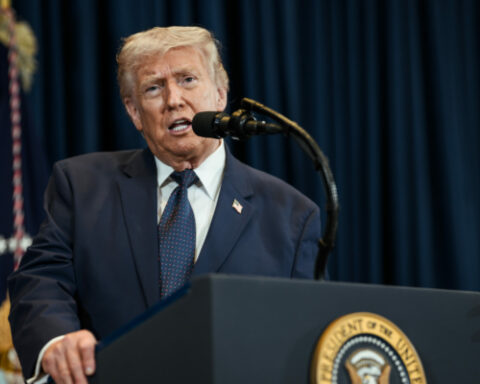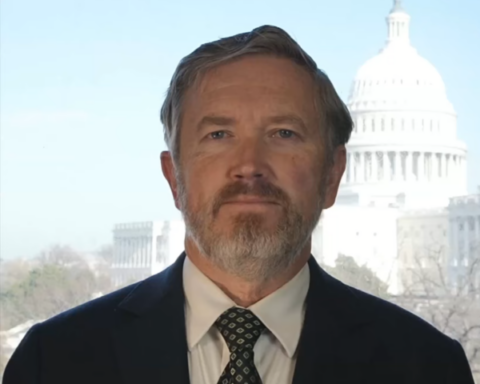

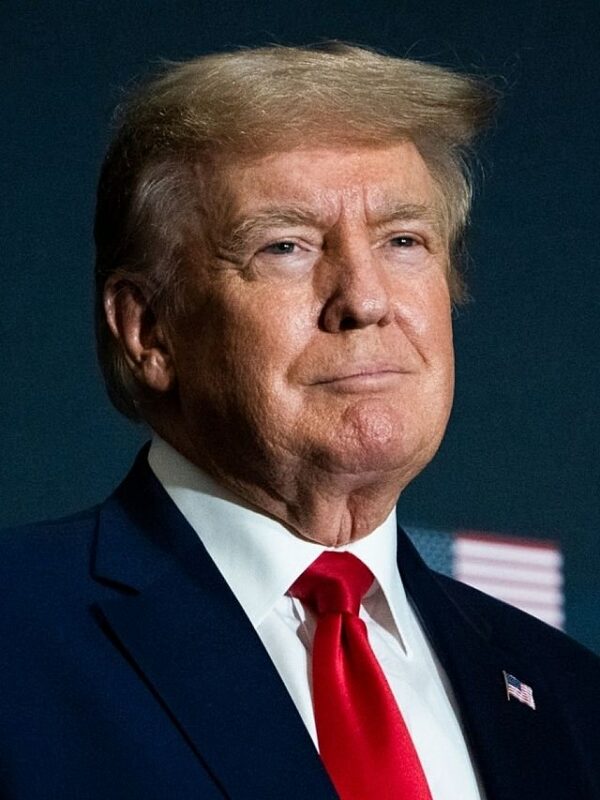
President Donald Trump renewed his criticism of the NATO alliance this week, raising doubts about its reliability following a White House meeting with NATO Secretary-General Mark Rutte.
In a sharply worded Truth Social post Wednesday evening, Trump argued that NATO has failed to stand with the United States when needed and would likely do so again in the future. He also referenced his past push to take control of Greenland, a proposal that drew international attention earlier this year.
The remarks came after a roughly two-hour meeting between Trump and Rutte at the White House, a discussion that took place against the backdrop of rising tensions between the U.S. and its European allies. Much of that strain stems from frustration within the Trump administration over NATO members declining to join the U.S.-Israeli war against Iran.
While Rutte has largely supported the conflict, the alliance itself has not moved in lockstep with Washington, exposing divisions that have long simmered beneath the surface. Trump has previously warned that the United States could withdraw from NATO, a move that would require congressional approval but remains politically significant even as a threat.
European leaders have expressed concern that such rhetoric alone is already weakening the alliance, signaling uncertainty at a time when cooperation has traditionally been viewed as a cornerstone of Western security.
Earlier this year, Rutte played a key role in easing tensions over Greenland during the Davos summit, where he helped steer discussions away from the prospect of a U.S. attempt to seize the Arctic territory by force. Instead, he encouraged a more diplomatic framework, temporarily defusing what had become a flashpoint in transatlantic relations.
Still, questions about NATO’s future role have continued to grow, particularly as the war in Iran has tested the limits of allied coordination. Critics within the administration argue that the alliance has become increasingly imbalanced, with the United States carrying a disproportionate share of the burden.
Secretary of State Marco Rubio echoed those concerns in a recent interview, suggesting that Washington may need to reassess its relationship with NATO once the conflict concludes. Speaking with Fox News host Sean Hannity, Rubio said the decision ultimately rests with the president but acknowledged growing unease within the administration.
He questioned whether NATO continues to serve its intended purpose, or whether it has evolved into what he described as a “one-way street,” where the United States is expected to defend Europe without receiving reciprocal support. Rubio specifically pointed to concerns that allies have denied basing rights and overflight access during times of need.
The debate highlights a broader tension within U.S. foreign policy, where longstanding alliances are being reexamined through the lens of current conflicts. While NATO has historically been seen as a stabilizing force, the demands of modern warfare—and the reluctance of some members to engage—are prompting fresh scrutiny.
At the same time, the situation reflects a deeper question about the costs and commitments of international conflict. As disagreements persist, the challenge for policymakers will be balancing strategic partnerships with the realities of war, where expectations and outcomes do not always align.
[READ MORE: Trump Adjusts Ceasefire Terms After Netanyahu Call as Iran Deal Faces Confusion]