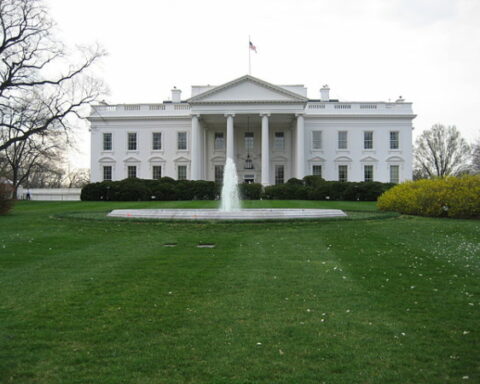

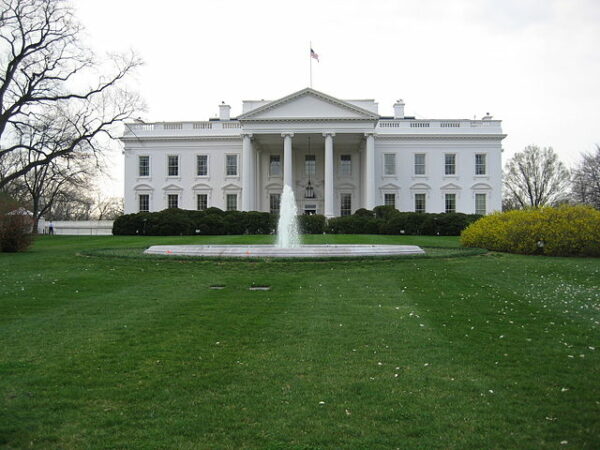
President Donald Trump is reportedly taking the legal fight over construction of a White House ballroom to the Supreme Court, asking the nation’s highest court to step in after a lower court ordered the project halted.
The Trump administration filed an emergency stay request Friday seeking permission for construction to continue while the legal battle plays out. The administration cited national security concerns and previous assassination attempts against Trump as part of its argument for allowing work on the project to move forward.
The filing comes after an appeals court in Washington, D.C., ordered construction stopped until lawmakers approve the project.
U.S. Solicitor General D. John Sauer argued in the filing that Trump, as president, has authority to make changes necessary to renovate and protect the White House and its grounds.
“The President of the United States of America is not a tenant, but rather the sole, elected head of the Executive Branch, and Congress has authorized him to renovate, secure, and protect the White House and its grounds, as other Presidents have been allowed to do, without exception,” Sauer wrote.
Sauer called the injunction “judicial overreach beyond the proper province of the federal courts.”
The administration also warned that allowing the injunction to remain in place would effectively give a single federal judge authority to decide which parts of the construction are necessary for protecting the president and others at the White House.
“If allowed to go into effect, the injunction would wrongfully install a single district judge as sole arbiter of what further construction is ‘strictly necessary’ to protect the safety of the President, his family, staff members, and visitors to the White House, including foreign dignitaries, and presidents and prime ministers of other countries,” Sauer wrote.
The solicitor general also challenged the basis for one plaintiff’s objection to the ballroom, arguing that her concerns about the White House’s appearance amounted to a personal preference rather than the type of injury necessary to justify blocking construction.
“Her subjective preference does not create a concrete, particularized injury, no matter how strongly she feels about the White House’s appearance (or any other federal building’s),” Sauer wrote.
“Her distaste, moreover, is subjective and personal, not universal — contrary to the lower courts’ presumption.”
Sauer further argued that the injunction serves little purpose because construction on the ballroom has already been underway for months. According to the filing, work on the project began in October 2025.
The Supreme Court fight now places the dispute over the White House ballroom before the nation’s highest court, with the Trump administration seeking emergency relief from the order stopping construction.
At the heart of the administration’s argument is its contention that the president has authority to renovate and secure the White House grounds and that federal courts should not determine which construction measures are necessary to protect the president, his family, White House personnel, visitors and foreign leaders.