
Health and Human Services Secretary Robert F. Kennedy Jr. is turning up the pressure on major food and beverage companies, saying brands like Dunkin’ and Starbucks will need to prove their ingredients are safe — a push that quickly sparked pushback from Massachusetts Gov. Maura Healey.
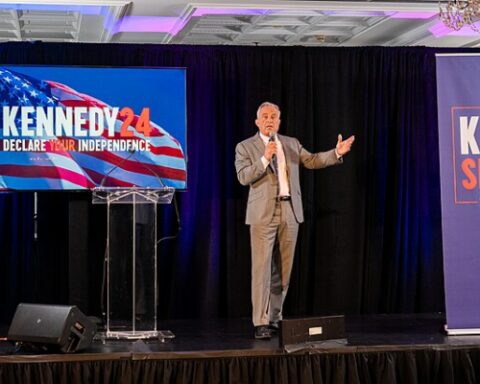
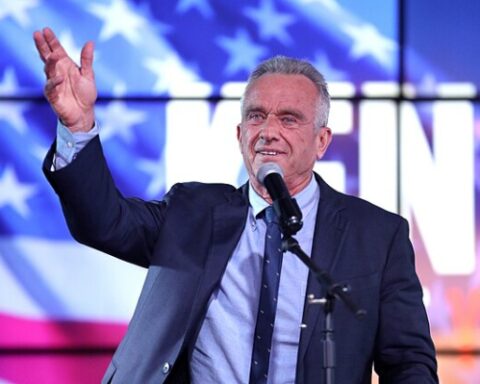
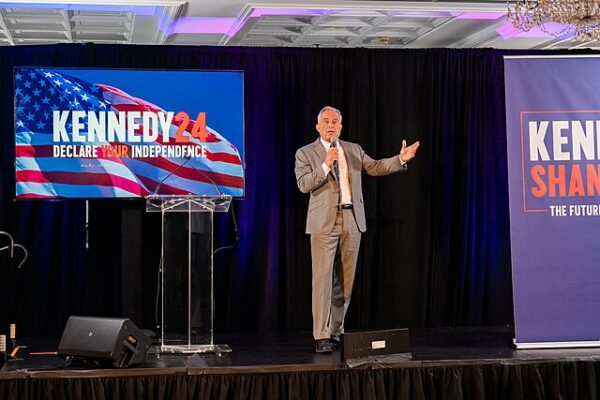
Kennedy made the remarks during a rally last week at Brazos Hall in Austin, Texas, where he outlined plans to tighten scrutiny over ingredients used in American food and beverages.
“We’re going to ask Dunkin’ Donuts and Starbucks, ‘Show us the safety data that show that it’s OK for a teenage girl to drink an iced coffee with 115 grams of sugar in it,’” Kennedy told the crowd.
The comment drew applause from the audience as Kennedy suggested the companies might struggle to justify the ingredients used in some of their products.
“I don’t think they’re going to be able to do it,” he added.
Kennedy’s comments are part of a broader effort tied to his health advocacy work aimed at overhauling how food ingredients are approved in the United States. According to MAHA Action, a nonprofit health advocacy organization founded by Kennedy, the initiative is meant to ensure American foods meet what the group describes as the highest safety and nutritional standards globally.
But the remarks quickly drew a response from Healey, a Democrat who governs the state where Dunkin’ is headquartered.
Taking to the social media platform X on Wednesday, Healey fired back with a pointed message aimed at Kennedy’s criticism of the Canton, Massachusetts–based chain. The governor posted an image inspired by the historic “Come and Take It” flag from the 1835 Texas Revolution.
Instead of the cannon featured on the original flag, however, the image shared by Healey replaced it with a silhouetted Dunkin’ coffee cup — signaling a symbolic defense of the company.
The Hill reached out to both the Department of Health and Human Services and Dunkin’ for comment regarding the dispute.
Kennedy has made reforming the food ingredient approval process a central part of his agenda. Speaking in Austin, he said one of the goals of the effort is what he described as the “closure of the GRAS loophole,” referring to the federal policy known as Generally Recognized as Safe.
Under the GRAS framework, companies can determine on their own whether certain ingredients are safe for use in food products without direct oversight from the Food and Drug Administration.
Kennedy sharply criticized the policy during an interview last month on “60 Minutes.”
“That loophole was hijacked by the industry, and it was used to add thousands upon thousands of new ingredients into our food supply,” Kennedy said during the interview with correspondent Bill Whitaker.
He also pointed to differences between American and European food regulations.
“In Europe there’s only 400 legal ingredients,” Kennedy said. “This agency does not know how many ingredients there are in American food.”
Industry groups, however, are pushing back against Kennedy’s claims.
The National Association of Manufacturers released a report last Wednesday arguing that the U.S. food and beverage supply chain already provides Americans with what it described as “safe, abundant, accessible and nutritious” options.
The organization warned that policy changes targeting the current system could create unintended consequences.
According to the group, “policy trends threaten America’s safe and abundant food supply, global leadership in safe and nutritious food production and innovation across food technologies.”
They also cautioned that sweeping regulatory changes could increase costs for both consumers and companies.