

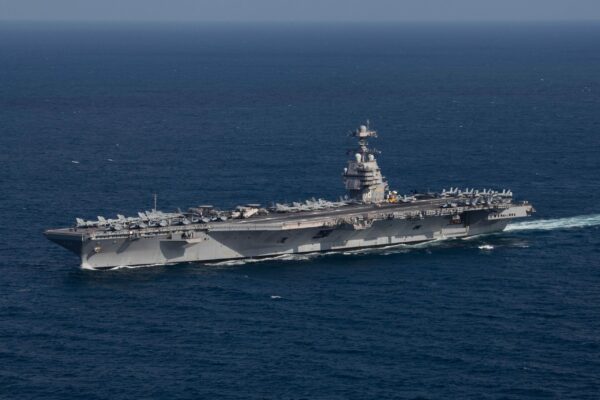
Families of sailors aboard the San Diego-based USS Abraham Lincoln are sounding the alarm over conditions aboard the aircraft carrier during its months-long deployment, with relatives reporting that some sailors have attempted to jump overboard.
More than 5,000 sailors and Marines have been deployed aboard the Lincoln since Nov. 21.
The Nimitz-class nuclear-powered aircraft carrier has been operating in the North Arabian Sea in support of U.S. operations against Iran in a conflict that began Feb. 28.
During a meeting with Navy officials last week, families complained about the more than eight-month deployment and conditions aboard the ship, including clogged toilets, mildew in showers, problems with food supplies and serious concerns about sailors’ mental health.
One parent reportedly said her daughter believed she would die aboard the carrier.
Annabelle Loma said her husband, a 13-year Navy veteran, attempted to leap overboard and is now on a medical hold.
“He’s scared,” Loma told the Navy Times.
Loma said her husband’s deployment had been extended multiple times and that he is now worried about what could happen to his military career.
“He thinks he’ll get a dishonorable discharge, and just because he was burnt out, his 13-year career is ruined, just like that,” she said. “That’s not fair, that’s not right. That’s not what he should be worrying about right now.”
Another spouse, Maria Rodriguez, said her husband managed to stop another sailor from jumping overboard. Rodriguez said her husband grabbed the sailor and pulled them back onto the deck as three others rushed over to assist.
“He said he hadn’t felt adrenaline like that in his life,” Rodriguez said, adding that her husband was thankful he reached the sailor in time.
Families also described the toll the deployment is taking on those waiting at home.
High school student Shelby Sanders, whose mother serves aboard the Lincoln, said her mother sounds discouraged when she is able to communicate.
“When she can email me, she’s definitely down,” Sanders said, noting that combat operations have made communication difficult.
Sanders said she does not know whether her mother will return for major events including homecoming, her birthday or Christmas.
Manuel Guevara similarly said his son has sounded exhausted during the deployment.
“I don’t want to worry that the circumstances of this deployment will get the best of my son, and he doesn’t make it back home,” Guevara said. “That’s an unbearable burden on my heart.”
The Navy declined to discuss individual cases but disputed suggestions that suicidal behavior has increased aboard the Lincoln.
A Navy spokesperson acknowledged extended deployments place “significant strain” on service members and their families but said the command has “not identified an increase in reported suicidal ideation or suicide attempts aboard the ship.”
The Navy said sailors have access to medical and mental health professionals, chaplains, deployment-resilience counselors, Fleet and Family Support Center services and Military OneSource.
“The health and well-being of every Sailor aboard Abraham Lincoln is a priority,” the spokesperson said.