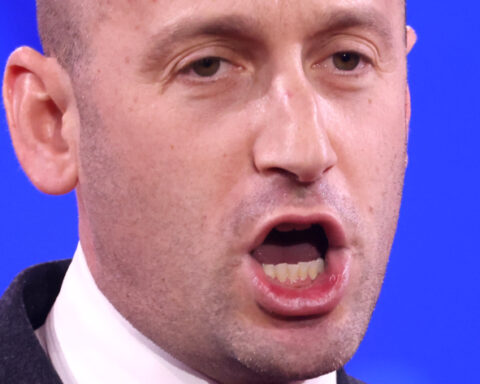

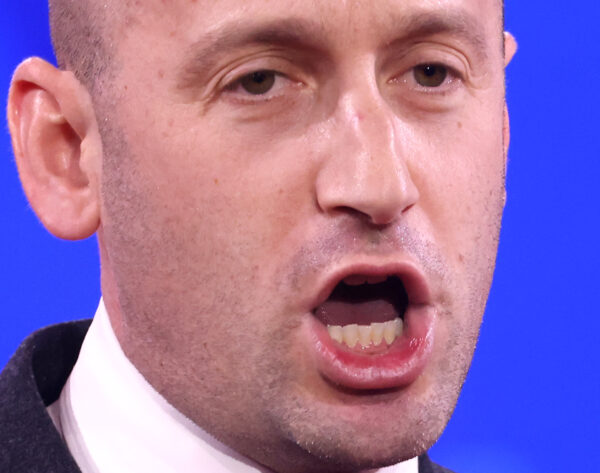
Fox News host Laura Ingraham put Trump Deputy Chief of Staff Stephen Miller on the spot Wednesday night, pressing him over President Donald Trump’s admission that Iran’s recent wave of retaliatory strikes had come as a surprise to the administration.
The exchange followed Trump’s remarks earlier in the week, when he told reporters he was “shocked” by the scope of Iran’s response after U.S. and Israeli strikes. The president pointed to attacks that hit multiple countries across the region, including Qatar, Saudi Arabia, the United Arab Emirates, Bahrain, and Kuwait.
“Look what happened,” Trump said. “Nobody expected that. We were shocked.”
Appearing on The Ingraham Angle, Miller was asked directly why such a development was not anticipated, especially given the extensive resources devoted to military planning. Ingraham framed the issue in practical terms, noting that planners spend significant time preparing for scenarios like regional escalation.
“We do have military planners who spend an enormous amount of time and money gaming out these war plans,” she said. “Why didn’t they anticipate this and inform the president?”
Miller pushed back, suggesting that Trump’s remarks were being misinterpreted. He argued that the president’s comments were not about a failure of planning, but rather about what Iran’s actions revealed about its intentions.
“What the president is talking about is the fact that Iran revealed itself,” Miller said, pointing to the targeting of countries he described as non-combatants. He said the strikes underscored what he characterized as the regime’s recklessness and broader ambitions.
Miller went on at length, emphasizing that the administration had strong intelligence on Iran’s capabilities and preparations. He described U.S. military planning as “exquisite,” highlighting defensive systems that have intercepted Iranian drones and missiles, as well as operations targeting launch sites and infrastructure.
“What we’re not talking about is… American weaponry that is shooting down those Iranian drones, that is shooting down those Iranian missiles,” he said, arguing that Iranian forces are being “overwhelmed at every single step along the way.”
Still, Ingraham continued to probe, raising the possibility that Iran may be receiving assistance from Russia and asking whether that had been anticipated as well. Miller responded that it was expected Iran would seek outside help, while maintaining that U.S. capabilities remain unmatched.
“Our capabilities are so far beyond anyone else’s in the world,” he said, pointing to ongoing operations as evidence of American strength.
The exchange highlighted a broader tension in how the administration is presenting the conflict. On one hand, officials are projecting confidence in military planning and execution. On the other, the acknowledgment of surprise—however it is explained—underscores the unpredictable nature of war, where even carefully laid plans can be tested by events on the ground.
While Miller emphasized success and intelligence advantages, the conversation also reflected a deeper question: how much can any administration truly anticipate in a rapidly evolving conflict? Even with extensive planning, the reality of war often introduces variables that defy expectations.
For viewers, the moment offered a rare glimpse into the balancing act between projecting control and acknowledging uncertainty. The administration’s message remains one of strength and preparedness. Yet the discussion also served as a reminder that in any conflict, outcomes are not always as predictable as planners might hope.
As the war continues, that tension—between confidence and unpredictability—may remain a defining feature of both the battlefield and the conversation surrounding it.
[READ MORE: GOP Lawmaker Signals Support for Securing Iranian Oil Hub as Questions Mount Over Escalation]