
The Wall Street Journal editorial board delivered a scathing rebuke of President Trump on Monday. It accused him of borrowing from Chinese President Xi Jinping’s playbook by pressuring Nvidia to reinstate CEO Jensen Huang.
The editorial argued that Trump’s role in Huang’s return threatens both national security and the rule of law. It suggested that Trump admires the Chinese Communist Party leader because both are willing to boss around private companies.
Nvidia announced Huang’s return less than two weeks after he stepped down. He left amid reports of an affair with a subordinate and of ties to an alleged Chinese spy. That woman, Alice Huang, who is no relation, worked for Megaspeed. Megaspeed is an Nvidia customer accused of helping Chinese firms evade U.S. chip export controls.
Trump has said his administration conducted a very thorough investigation that cleared Huang. The Journal’s editors were not convinced and mocked it as likely the quickest thorough investigation in history.
The board suggested that Trump effectively told Nvidia’s directors the administration would not punish the company for possible export-control or securities violations if it brought Huang back. The editorial noted that the Justice Department had been investigating. It also cited a Bloomberg report that the board acted under pressure from Trump without consulting company executives.
The editorial called the episode a political bailout. It acknowledged that Huang has curried favor with Trump but argued that the stock market appears to be the main driver of the intervention. Trump told CNBC that the recent selloff was probably a factor, though he said the bigger impact was long term.
The Journal argued that Trump is signaling export controls are merely notional and that national security comes second to his political wishes. The editors pointed to 2025, when Trump refused to enforce a TikTok ban that Congress had passed with bipartisan majorities on national security grounds.
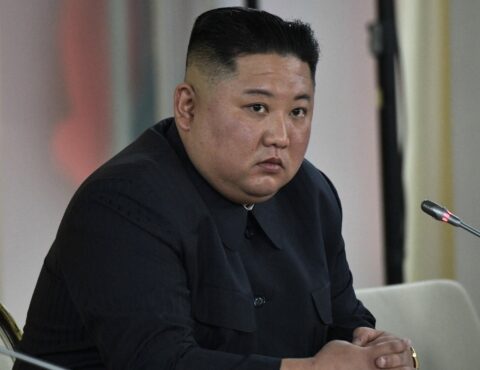
The board saved its sharpest line for last. It said it was beginning to understand why Trump admires Xi, who it said can “give orders to private companies and ignore the law” when it suits him.
The editors also warned that the jump in Nvidia’s share price would not erase the heavy cost of Trump’s intervention to the rule of law and national security.
Nvidia shares rose more than 30% after Huang’s return, adding nearly $1 trillion in market value. A Financial Times analysis estimated that Trump’s personal stock holdings gained more than $15 million.
The Journal’s criticism adds to growing concern on Trump’s own side of the aisle. Senate Intelligence Committee Chairman Tom Cotton, R-Ark., said Congress has much to investigate. Sen. John Cornyn, R-Texas, has questioned the board’s assurance that Huang poses no security risk. Former House Speaker Newt Gingrich said there was something profoundly wrong about the reinstatement.
Trump has defended his involvement. He says Attorney General Todd Blanche confirmed the government has no evidence Huang broke the law.
The Journal’s editorial board has long been a pillar of conservative opinion. During Trump’s second term, it has increasingly clashed with him on issues ranging from tariffs to his handling of the economy.