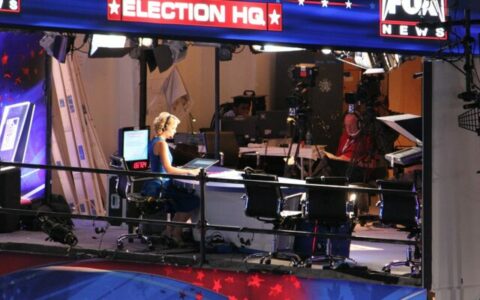

A panel of co-hosts on Fox News’ The Five delivered a candid assessment Monday of the political landscape heading into November, warning that Republican prospects in the midterm elections may be more precarious than many would like to admit.
The discussion, led by Greg Gutfeld and guest co-host Kayleigh McEnany, struck a notably sober tone. Gutfeld opened by raising a question that has lingered quietly in conservative circles: whether Republicans are at risk of being caught off guard.
“I don’t want to be surprised or blindsided in November,” Gutfeld said. “Should we be honest now and say, are we in danger?”
McEnany did not hesitate. “Yeah, we are,” she replied, pointing to historical patterns that have long shaped midterm outcomes. The party in power, she noted, typically faces losses as elections become a referendum on its performance. “It’s an uphill battle, and we have to be frank about that.”
Still, McEnany argued that Republicans are far from out of the fight—provided they stay disciplined and center their message on key issues rather than political noise. Pushing back on Democratic guest co-host Harold Ford Jr., she emphasized that elections are ultimately about voter choice, not just retrospective judgment.
“When given a choice—Republican, Democrat—Republicans are beating Democrats plus 27 on border security, plus 22 on crime, plus eight on immigration, and it’s even on the economy,” she said, citing polling data. Her message was clear: if Republicans keep the focus on those issues, they have a path forward.
The conversation also highlighted divisions within the Democratic Party. McEnany referenced a recent discussion with former Sen. Joe Manchin, who, she said, stressed the importance of Democrats aligning with what voters are actually experiencing on the ground.
According to McEnany, Manchin suggested that Democrats need to listen more closely to figures like Sen. John Fetterman, rather than relying on leadership voices such as Senate Majority Leader Chuck Schumer. She argued that those more moderate or pragmatic voices are often dismissed, even as they may better reflect broader public sentiment.
McEnany also took aim at what she described as Democrats’ reliance on “Trump Derangement Syndrome” as a political strategy. While acknowledging that such an approach might yield short-term gains in a midterm environment shaped by historical trends, she questioned its long-term viability.
“What’s the governing strategy of Democrats?” she asked. “You could win this election… but TDS cannot be the strategy in 2028. That’s not going to take you to the Promised Land.”
The exchange turned more pointed when McEnany listed a series of policy areas where she sees Democrats lacking clarity, including Medicare for All, support for Israel, and proposals like government-run grocery stores. She argued that internal disagreements on these issues could create vulnerabilities.
Ford Jr. pushed back, asserting his own positions and expressing confidence that Democrats can address those questions. But McEnany responded by characterizing his stance as part of a more pragmatic wing within the party.
“You’re the Fetterman wing,” she said. “That’s the smarter wing.”
The broader takeaway from the panel was one of cautious realism. While Republicans may hold advantages on several key issues, the weight of history and the unpredictability of the current political climate present real challenges.
In a time when national debates are often overshadowed by sharp rhetoric and high-stakes conflicts, the panel’s message hinted at a quieter concern: that political parties risk losing focus on the issues that matter most to voters if they become consumed by distractions. And in an election cycle where control hangs in the balance, that could make all the difference.