
President Donald Trump is once again breaking with some voices inside his own political movement, this time defending Chinese nationals purchasing American farmland and arguing that foreign students — including those from China — play an important role in the United States economy and higher education system.
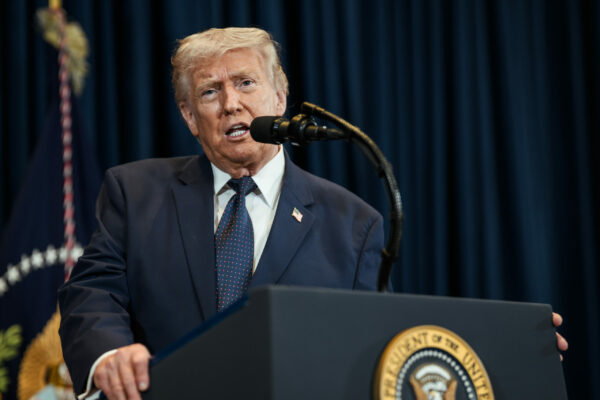
During a Thursday evening interview with Sean Hannity on Fox News, Trump addressed growing Republican concerns about Chinese ownership of U.S. farmland. While acknowledging discomfort with the issue, the president warned that removing foreign buyers from the market could hurt American farmers financially.
“Look, it’s not that I love it,” Trump said. “You want to see farm prices drop, you want to see farmers lose a lot of money? Just take that out of the market.”
Trump also defended allowing large numbers of foreign students to study in the United States, including students from China who may later wish to remain in the country. The president suggested that some “good” students who want to stay in America could potentially receive green cards.
Calling it “a very insulting thing to tell a country ‘we don’t want your people in our schools,’” Trump argued that many smaller colleges and universities would suffer badly if foreign enrollment suddenly disappeared.
“If you want to see a university system die, take a half-a-million people out of it,” Trump said. According to the president, elite universities would likely survive such a change, but lower-tier institutions “would be dying all over the place.”
Trump framed the issue less as ideology and more as practicality, saying he views himself as “a common sense guy more than a conservative guy.” He added that he believes it is beneficial for foreign students to come to America, learn American culture, and in some cases remain in the country.
Still, the comments immediately triggered criticism from conservatives who have increasingly warned about China’s economic and strategic influence inside the United States.
The debate is especially notable because Trump’s own administration has previously taken a far tougher position on Chinese investment in America. In February 2025, Trump issued a national security memorandum aimed at restricting Chinese investments in several sectors considered sensitive, including agriculture.
That memorandum stated the United States would protect farmland and real estate near sensitive facilities while strengthening oversight of foreign investment tied to adversarial nations. The administration later unveiled a “National Farm Security Action Plan” in July 2025 intended to address what officials described as urgent threats posed by foreign adversaries to America’s food and agricultural systems.
Critics of Trump’s latest remarks argue the president’s comments appear difficult to reconcile with those earlier efforts.
Kangmin Lee criticized the current university system in a Thursday post on X, arguing that “those 500,000 spots should go to American students first.” Lee said Trump was correct that many smaller colleges depend heavily on foreign tuition money, but argued that dependence itself reveals a deeper problem within higher education.
Meanwhile, former Georgia congresswoman Marjorie Taylor Greene delivered even sharper criticism, writing on X that American students are being rejected while hundreds of thousands of Chinese students are admitted.
“And NO it is not ok for China to buy our farmland!!!” Greene wrote. “And no that’s not common sense!!!”
Trump has voiced similar views before. In August 2025, he said he would allow 600,000 Chinese students to study in the United States, later telling the Daily Caller that encouraging positive relations with other countries was “the right thing to do.”
The controversy arrives as concerns continue to grow among Republicans over the steady increase in Chinese ownership of American farmland during the past decade. For many conservatives, the issue has become about more than economics — touching on national security, food independence, and the long-term balance between open markets and protecting critical American assets from foreign influence.
At the same time, Trump’s remarks suggest he remains wary of policies that could disrupt markets, weaken universities, or escalate tensions unnecessarily in an already fragile global climate.
[READ MORE: Trump Blasts CBS Reporter Norah O’Donnell During Beijing Interview With Hannity]