
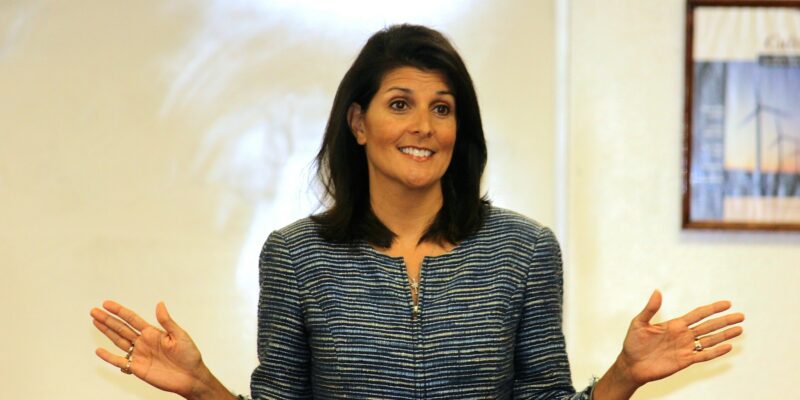
Former Republican presidential candidate Nikki Haley made clear Sunday that she will not pursue the party’s nomination in 2028, signaling a shift in the evolving landscape of Republican politics as attention gradually turns to the post-Trump era.
Appearing on CNN’s “State of the Union,” Haley gave a direct answer when asked by host Dana Bash whether she would consider another run for the White House. “I will not,” she said, closing the door on speculation that she might mount a comeback campaign after her 2024 bid.
Haley, who previously served as governor of South Carolina and U.S. ambassador to the United Nations, entered the 2024 race as one of the more prominent challengers to Donald Trump. However, her campaign ultimately fell short. She secured just one primary victory and was defeated by Trump in her home state before suspending her campaign and endorsing the former president.
Her announcement comes as potential Republican contenders have already begun positioning themselves for a possible 2028 run. With Trump not yet naming a successor, attention has turned to a growing bench of GOP figures seeking to carry forward the party’s agenda.
Among those drawing early attention are Vice President JD Vance and Secretary of State Marco Rubio, both of whom are increasingly viewed as leading contenders. At the Conservative Political Action Conference earlier this year, Vance topped a straw poll of attendees, earning roughly 53 percent support—a sign of strong grassroots enthusiasm within conservative circles.
Trump himself has refrained from offering a formal endorsement but has expressed confidence in the party’s future leadership. In a January interview with NewsNation, he pointed to what he described as a “good bench” of Republican talent, while also noting that he has early favorites in mind.
For her part, Haley declined to weigh in on who might ultimately emerge as Trump’s successor, suggesting that the political landscape remains fluid.
“I think it’s too soon to tell,” she said. “I think that primaries are healthy. I think a year is a lifetime in politics.” She added that the conversation surrounding 2028 is likely to look very different in the near future, emphasizing uncertainty about who will ultimately enter the race.
On the Democratic side, several prominent figures have also left the door open to potential presidential bids. Former Vice President Kamala Harris and former Transportation Secretary Pete Buttigieg are among those signaling possible interest. A number of governors, including JB Pritzker, Josh Shapiro, Wes Moore, Gavin Newsom and Andy Beshear, have also kept their options open.
As both parties begin early maneuvering for 2028, Haley’s decision removes one familiar name from the Republican field. At the same time, it highlights the broader transition underway within American politics—one that will likely unfold amid ongoing debates about leadership, priorities and the direction of the country in an increasingly uncertain world.