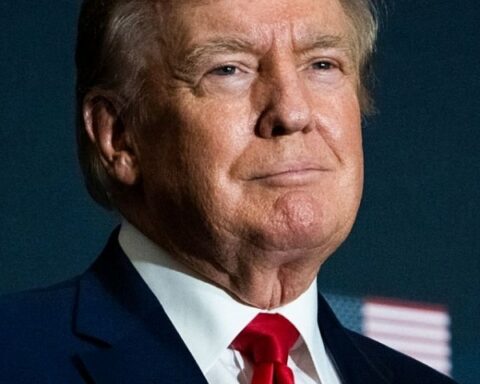

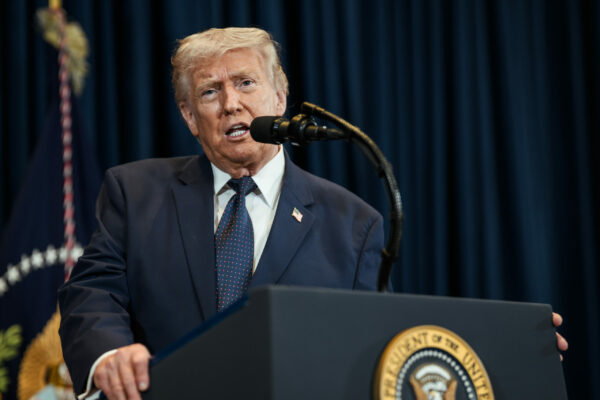
President Donald Trump took aim at Norah O’Donnell during an interview with Sean Hannity in Beijing, reviving tensions from a contentious “60 Minutes” sit-down that clearly remained fresh in the president’s mind weeks later.
The exchange unfolded while Trump was in China meeting with Chinese President Xi Jinping as part of a high-profile diplomatic trip that included discussions on trade, tariffs, and intellectual property concerns. Hannity asked Trump whether he could report any progress from talks with China, particularly with a large group of American business executives accompanying the president overseas.
Instead of immediately addressing trade negotiations, Trump veered into criticism of O’Donnell and his recent interview with CBS News program “60 Minutes.”
Trump described O’Donnell as a “very bad” and “stupid reporter,” dismissing her performance during the interview and claiming “you could take anybody off the street, and it’d be as good as she is.”
The president then referenced a moment from the interview where O’Donnell questioned him about China and espionage. Trump recounted telling her that both the United States and China engage in spying activities against one another.
“I said, ‘We do it to them too, you know? They spy on us and we spy on them too I guess,’” Trump recalled.
He acknowledged that some critics objected to the remark, saying people told him he “didn’t have to say that,” but Trump insisted he felt compelled to speak candidly.
The comments highlighted Trump’s tendency to reject the carefully scripted language often used in diplomatic discussions, even when discussing geopolitical rivals like China. At the same time, the exchange underscored how deeply intertwined media battles have become with broader debates over trade, foreign policy, and America’s global posture.
The president’s frustration with O’Donnell appears tied in part to a heated confrontation during last month’s “60 Minutes” interview. During that exchange, O’Donnell cited statements allegedly written by Cole Tomas Allen, the accused gunman who stormed the White House Correspondents’ Dinner before Trump was escorted away by Secret Service agents.
Reading from the alleged writings, O’Donnell quoted language referring to “administrative officials” as “targets” and included accusations labeling Trump a “pedophile, rapist, and traitor.”
Trump reacted angrily to the line of questioning.
“Well, I was waiting for you to read that, because I knew you would, because you’re horrible people,” Trump told O’Donnell during the interview.
The president strongly denied the accusations cited in the alleged gunman’s remarks, stating, “I am not a rapist. I didn’t rape anybody.”
When O’Donnell followed up by asking whether Trump believed the statements referred to him personally, the president became even more confrontational.
“Excuse me. Excuse me. I am not a pedophile,” Trump said before accusing O’Donnell of reading “crap from some sick person” and calling the journalist “a disgrace.”
The clash reflected the increasingly hostile relationship between Trump and many establishment media outlets, particularly legacy broadcast networks that have often sparred with the president over coverage of his administration and rhetoric.
Even while discussions in Beijing centered on economic competition and tensions between world powers, the interview served as another reminder that political and media conflicts at home continue to shape the tone of America’s public discourse abroad — often blurring the line between diplomacy, spectacle, and confrontation.
[READ MORE: Trump Ally Maps Aggressive Midterm Strategy as GOP Eyes Gains Amid Party Divides]