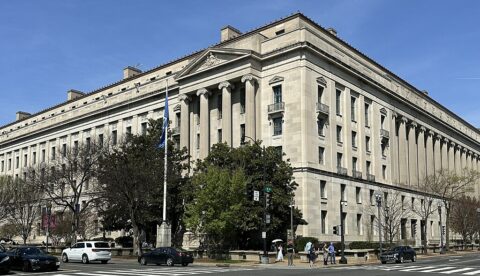

The Department of Justice under President Donald Trump has reportedly approved Paramount-Skydance’s $111 billion acquisition of Warner Bros. Discovery, paving the way for one of the largest media mergers in recent years and potentially reshaping the landscape of American television news and entertainment.
According to a report from Politico, the deal is expected to be formally announced Friday. The report cited two individuals familiar with the matter who said federal regulators completed an extensive review before determining the transaction did not present a threat to competition.
Justice Department officials ultimately chose not to challenge the merger and approved it without requiring divestitures, behavioral remedies, or other concessions, according to one of the sources cited in the report.
The decision marks a significant milestone for Paramount and Skydance, whose proposed acquisition would bring together major media assets including CNN, HBO Max, CBS News, and a range of entertainment properties under a single corporate umbrella.
In the weeks leading up to the expected approval, Paramount CEO David Ellison reportedly met directly with officials from the Justice Department’s Antitrust Division. Ellison is the son of Larry Ellison, the technology billionaire and prominent supporter of President Trump.
While federal regulators appear prepared to allow the transaction to move forward, the merger may still face legal challenges at the state level. Politico reported that California Attorney General Rob Bonta has been investigating the deal and could potentially pursue legal action aimed at blocking the merger despite federal approval.
Beyond its financial implications, the merger could carry major consequences for the future direction of some of the nation’s most recognizable news organizations.
According to reporting from Axios, CBS News editor-in-chief Bari Weiss could be placed in charge of CNN’s editorial division as part of the combined company’s restructuring efforts. Paramount is reportedly seeking a separate executive to oversee business operations, potentially allowing Weiss to focus exclusively on editorial responsibilities across both news organizations.
Such a move would represent a notable expansion of Weiss’s influence within the media industry.
Before joining CBS News, Weiss worked as an opinion editor at The New York Times and later founded the digital media company The Free Press. Although she does not have experience running a television news operation, she has emerged as a prominent figure in journalism and media circles.
Her leadership at CBS News has not been without controversy. Weiss has faced criticism from some on the political left over changes made at CBS, including decisions involving the long-running news magazine 60 Minutes and the appointment of technology journalist Nick Bilton as executive producer.
Despite criticism from some current and former CBS journalists, Axios reported that Paramount leadership remains strongly supportive of Weiss.
One source quoted by the outlet said company executives have full confidence in her leadership and that David Ellison believes she has performed exceptionally well in her role as editor-in-chief.
The prospect of new ownership and potential editorial changes has reportedly generated anxiety inside CNN as well. According to earlier reporting from NBC News, some CNN employees described morale within the organization as “shaken” and “depressing” amid uncertainty surrounding the company’s future.
As the merger moves toward completion, attention will likely shift from regulatory approval to how the combined media giant intends to manage its vast portfolio of news and entertainment brands. While corporate consolidations are often promoted as opportunities for growth and efficiency, they can also spark concerns about newsroom culture, editorial independence, and the concentration of influence within a handful of powerful institutions.
For now, however, the Justice Department’s decision appears to have cleared the biggest federal hurdle standing in the way of the historic deal.