
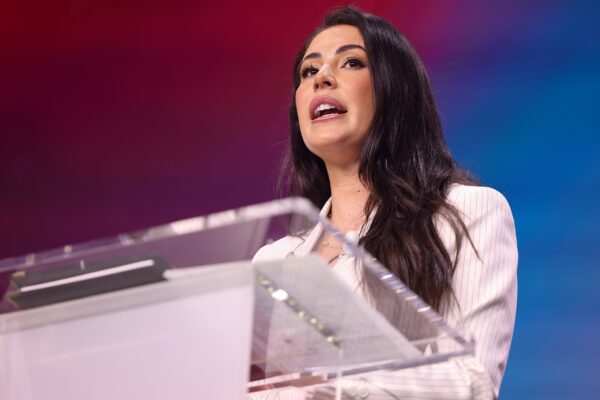
A contentious debate is unfolding on Capitol Hill as Rep. Anna Paulina Luna draws a hard line on the future of the federal government’s surveillance powers, warning that a key intelligence authority may be headed for collapse unless paired with new voter integrity measures.
Luna made clear this week that she will not support renewing Section 702 of the Foreign Intelligence Surveillance Act unless lawmakers attach the Safeguard American Voter Eligibility (SAVE) America Act. “I think FISA dies unless SAVE America is attached. Period,” she said in an interview, signaling a growing divide among Republicans over how to proceed.
The SAVE America Act, backed by GOP lawmakers, would require proof of citizenship to register for federal elections and mandate identification to cast a ballot. While the House approved the bill in February, it faces steep opposition in the Senate, where Democrats have indicated they will not provide the votes needed to overcome a filibuster.
Luna is now seeking to use the high-stakes renewal of Section 702 as leverage. The provision allows U.S. intelligence agencies to monitor foreign targets abroad without a warrant, a power long defended by national security officials but increasingly questioned by lawmakers concerned about its potential reach.
At the same time, President Donald Trump and House Speaker Mike Johnson are urging Republicans to rally behind a clean extension of the program. Trump called on the party to unify ahead of a key procedural vote, emphasizing the importance of passing the measure without additional amendments.
Johnson echoed that sentiment, warning that adding provisions could jeopardize the bill’s chances of clearing the House. He has stressed that the extension is too important to risk, particularly as the chamber prepares to bring the measure before the Rules Committee and potentially to the floor.
But not all Republicans are convinced. A number of lawmakers have voiced deep reservations about the surveillance authority itself, raising concerns that it infringes on the constitutional rights of Americans. Rep. Eric Burlison criticized the push for a clean renewal, arguing that it overlooks the concerns of constituents who believe their privacy is being compromised.
Rep. Tim Burchett has also expressed unease, saying he has “a lot of concerns” about the program and opposing what he described as government surveillance of American citizens.
The divide highlights a broader tension within the GOP, where priorities around national security, election integrity, and civil liberties are increasingly colliding. While some leaders argue that maintaining surveillance capabilities is essential in a dangerous world, others caution against expanding government power without stronger safeguards.
The path forward remains uncertain. With only a narrow margin for error, Johnson will likely need near-unanimous Republican support to advance the measure through a procedural vote and bring it to the floor for final passage.
As the debate continues, the clash reflects a deeper unease about the balance between security and freedom — a question that has long defined American policy in times of conflict. And while the tools of surveillance may be aimed abroad, the arguments unfolding in Washington suggest the consequences are being felt much closer to home.