
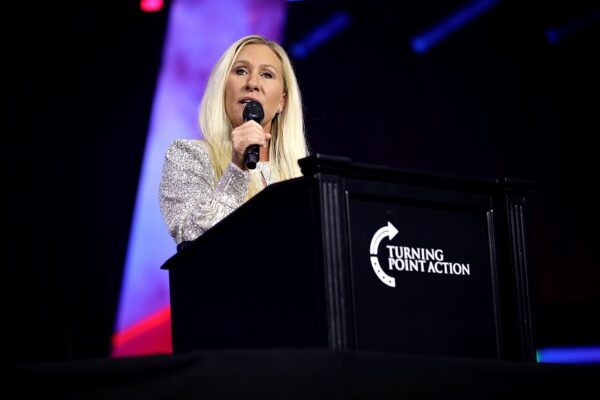
Former Rep. Marjorie Taylor Greene is pointing fingers at President Donald Trump and Republican leadership following a closely watched vote in Virginia that could reshape the political landscape ahead of November’s midterms.
On Tuesday, Virginia voters narrowly approved a referendum allowing lawmakers in the Democrat-controlled General Assembly to redraw congressional district maps mid-decade. With more than 95 percent of votes counted, the measure passed with 51.5 percent support, compared to 48.6 percent opposing it, according to Decision Desk HQ.
The outcome could significantly boost Democratic prospects in the state. While Democrats currently hold a 6-5 advantage in Virginia’s congressional delegation, the new map has the potential to expand that margin to as much as 10-1. Though the state’s bipartisan redistricting commission is set to regain control after the 2030 Census, and the Virginia Supreme Court could still weigh in, the immediate political implications are already drawing sharp reactions.
Greene, a vocal figure within the Republican Party’s America First wing, argued that the result reflects growing dissatisfaction among conservative voters. Writing on X, she described Virginia as a “once red state” now shifting further toward Democrats, claiming that many voters no longer feel motivated to support Republicans.
She placed much of the blame on Trump, warning that what she described as a departure from core America First principles could have serious consequences in the upcoming midterm elections. Greene said she had repeatedly cautioned that such a shift would alienate a key segment of the Republican base.
Among the issues she cited were the war with Iran, rising inflation, and the administration’s handling of files related to the late convicted sex offender Jeffrey Epstein. According to Greene, these factors contributed to what she called a “revolt on the right” and a broader disengagement among some voters who had previously supported Trump-aligned policies.
Greene also criticized her former Republican colleagues in Congress, accusing them of being too closely tied to corporate interests. She claimed that some lawmakers are more focused on maintaining relationships with donors and lobbyists than addressing the concerns of their constituents.
The Virginia vote comes despite a last-minute push from Trump, who urged voters to reject the referendum. Speaking during a tele-rally with House Speaker Mike Johnson, Trump described the measure as a “blatant partisan power grab,” warning that it could have long-term consequences for the balance of power in Washington.
The redistricting battle in Virginia is part of a broader national struggle over congressional maps. The current wave of disputes began in Texas last year, where Republican lawmakers redrew district lines in an effort to create additional pickup opportunities. That move sparked similar fights in several states, including California, Missouri, and North Carolina, with Florida potentially next as Gov. Ron DeSantis has called a special legislative session to address redistricting and related issues.
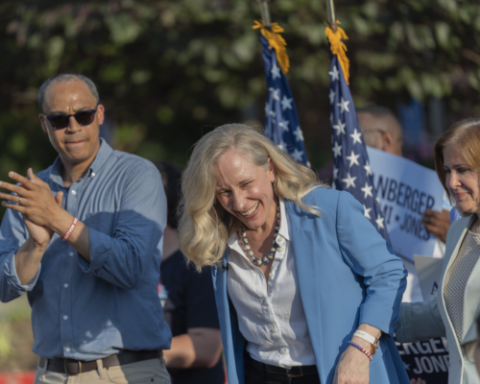
High-profile figures from both parties weighed in on the Virginia referendum, including Gov. Abigail Spanberger, former President Barack Obama, and former Gov. Glenn Youngkin.
As the dust settles, the outcome underscores the high stakes of redistricting battles across the country. While both parties continue to maneuver for advantage, the intensifying fight over political maps reflects a broader climate of division—one where electoral strategy often takes center stage, and where the long-term consequences for voters may extend well beyond a single election cycle.