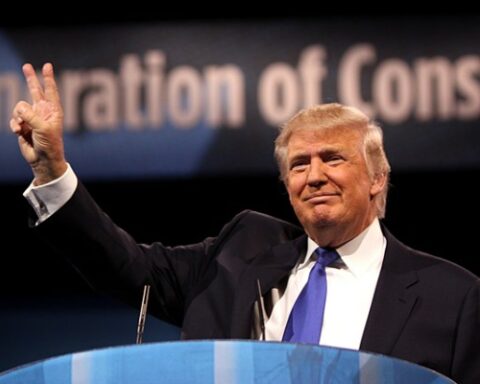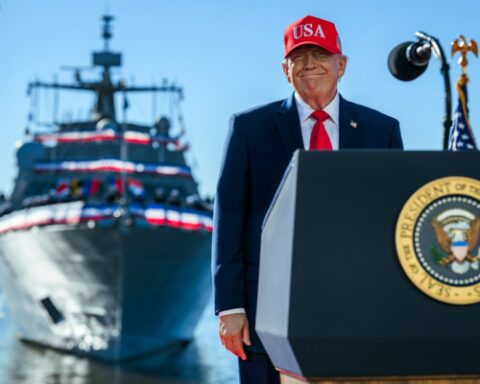

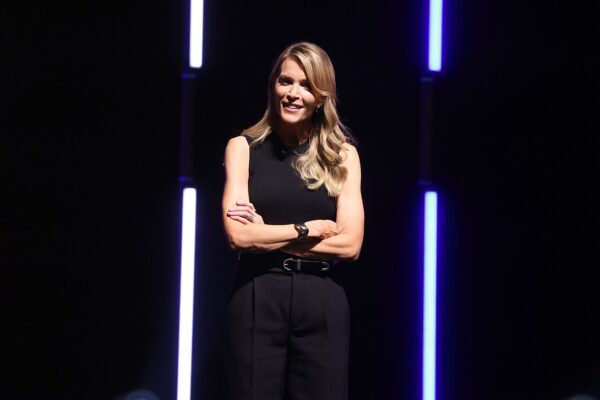
Former Trump ally Megyn Kelly is offering pointed criticism of President Donald Trump, raising questions not only about his personal character but also about how he is handling divisions within his own political base—particularly over the issue of war.
Speaking during a conversation with Russell Brand on “The Megyn Kelly Show,” Kelly did not hold back in describing what she sees as troubling aspects of the president’s personality. While acknowledging that many supporters have long accepted certain flaws, she argued that those issues are becoming harder to ignore.
“There are aspects of his personality which are obviously not good and that we’ve mostly just chosen to overlook,” Kelly said. She went on to describe Trump as “not a moral man” and “not the greatest husband in the world,” adding that he can be “extremely petty and thin-skinned.”
But Kelly’s criticism went beyond personal character. At the center of her remarks was a growing frustration over what she sees as a shift in Trump’s relationship with his core supporters—especially those who are skeptical of war. According to Kelly, the president is now clashing with longtime allies who have stood by him through past controversies, including legal battles and contentious elections.
She suggested that some of Trump’s most loyal backers are now being sidelined because they do not support the current war stance, a move she framed as both surprising and disappointing. In her view, this shift risks fracturing the very coalition that helped propel him to political prominence in the first place.
Kelly contrasted those supporters with figures she described as long-standing critics of Trump, arguing that the president appears to be aligning himself with individuals who opposed him for years. This dynamic, she implied, is creating confusion about what the movement around Trump is supposed to represent.
For many in the conservative base, loyalty has been a defining feature of the Trump era. Kelly emphasized that point, noting that numerous supporters—including herself and others like Tucker Carlson—have had disagreements with Trump in the past but still defended him vigorously when it mattered most. She pointed to efforts to push back against what she described as unfair legal and political attacks, as well as broader efforts to shape public understanding during election cycles.
That history, she argued, makes the current moment all the more striking. “There’s no loyalty in return ever from Trump. Ever,” Kelly said, expressing frustration with what she sees as a pattern: supporters who voice even principled disagreements risk being cast aside or labeled as adversaries.
Her comments reflect a broader unease that can emerge when political movements confront difficult questions—especially those tied to war. While strong leadership often demands decisiveness, it can also test alliances, particularly when supporters hold differing views on such high-stakes issues.
Despite her criticisms, Kelly stopped short of a full break with the president. She acknowledged that there is still “a lot to like about Trump,” suggesting that his appeal remains intact for many, even amid growing concerns.
Still, her warning was clear. The traits she described as Trump’s “darker demons,” once seen as manageable or secondary, are now more visible—and potentially more consequential. At a time when unity is often seen as essential, particularly in matters as serious as war, internal divisions and questions of loyalty may prove just as significant as any external challenge.