
In the tense aftermath of a shooting at the White House Correspondents’ Dinner, Peter Doocy pressed President Donald Trump with a question that cut straight to the heart of an unsettling pattern: why does this keep happening?
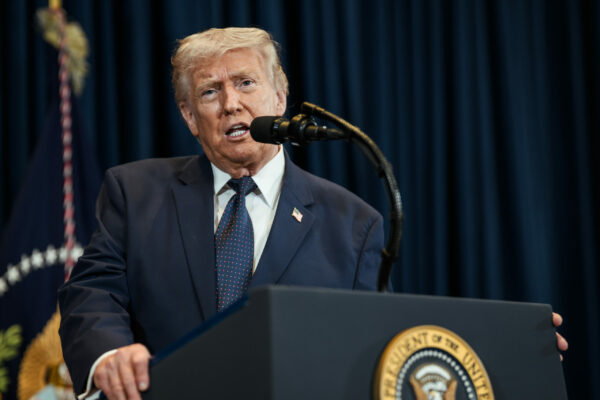
The exchange came during a press conference held in the White House briefing room roughly two hours after a gunman opened fire at the Washington Hilton, where top government officials, media figures, and the president himself had gathered. The incident once again underscored the persistent threats surrounding high-profile political events—moments meant to showcase the nation’s civic life, but increasingly overshadowed by security concerns.
Doocy referenced a report from the New York Post indicating that the suspect, identified as 31-year-old Cole Tomas Allen, may have assembled a rifle somewhere on the hotel premises before carrying out the attack. The implication raised serious questions about how such a breach could occur in a heavily secured environment.
But it was Doocy’s broader question that stood out: why does the president continue to be a target?
Trump, who has survived multiple assassination attempts—including a gunshot wound to the ear during a 2024 campaign rally in Butler, Pennsylvania—offered a response rooted in his own interpretation of history. He pointed to figures like Abraham Lincoln, suggesting that those who leave the largest mark often attract the greatest danger.
According to Trump, individuals who “do the most” and have the biggest impact are the ones most likely to be targeted. He framed the threats against him as a reflection of his influence, arguing that those dissatisfied with the direction of the country may be behind repeated attempts. While he acknowledged the gravity of such comparisons, he also suggested that the pattern speaks to the stakes involved in leadership at the highest level.
The president also defended his decision not to scale back public appearances, even in light of repeated threats. When asked whether indoor events should now be reconsidered—after earlier concerns about outdoor venues following the Butler incident—Trump dismissed the idea outright. Avoiding events altogether, he suggested, would not be a viable path forward.
“It is what it is,” Trump said, indicating a willingness to continue engaging in public settings despite the risks. He maintained that the ballroom had been secure and noted that the attacker approached from a distance of roughly 50 yards.
At the same time, Trump praised the response from security personnel. He described the suspect as moving quickly but emphasized that agents reacted with equal speed. According to the president, weapons were drawn and action was taken almost immediately as the threat materialized.
“I thought they were very impressive,” Trump said of the response, adding that he would not hesitate to speak out if he believed otherwise.
Still, the incident raises broader concerns that extend beyond any single event or individual. Even as the president highlighted the bravery and efficiency of those tasked with protecting him, the fact that such attacks continue to occur suggests deeper challenges in securing public spaces where leaders and citizens intersect.
In a climate where threats appear persistent and unpredictable, the balance between maintaining openness and ensuring safety grows more difficult. And while moments like these often bring out acts of courage, they also serve as reminders that the costs of ongoing tensions—whether political or otherwise—can surface in the most unexpected and dangerous ways.