

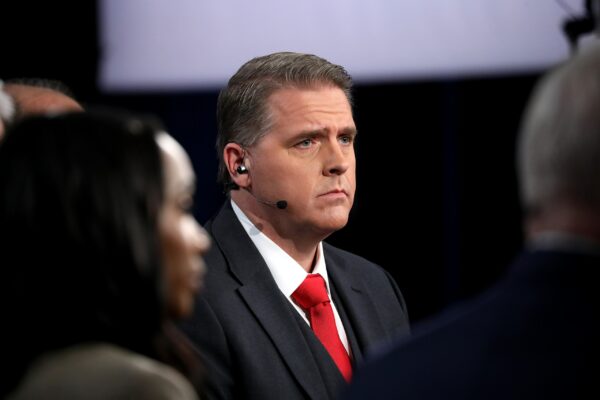
A tense debate on CNN erupted this week after conservative commentator Scott Jennings sharply pushed back against remarks suggesting that U.S. foreign policy played a role in the events that led to the September 11 terrorist attacks.
The exchange unfolded during Thursday night’s edition of CNN NewsNight as panelists discussed the United States’ ongoing military operation in Iran and the broader consequences of American involvement in conflicts overseas.
Keith Boykin, a former aide to President Bill Clinton, argued during the discussion that major international conflicts can create ripple effects that last for decades. According to Boykin, actions taken by governments can sometimes lead to long-term consequences that may not become clear until years later.
“No matter what happens with Iran and the United States, there will be some sort of long-term consequences that we may not see in the next few weeks, or months, or years, but may come some decades later,” Boykin said.
He pointed to historical examples that he believes demonstrate how earlier geopolitical decisions can shape future events.
Boykin referenced the 1979 Iran hostage crisis, arguing that it was connected to the 1953 overthrow of Iran’s democratically elected government. He then pointed to the September 11 attacks as another example of what he described as long-term fallout from earlier American military involvement.
“And the same thing happened when we saw 9/11,” Boykin said. “That was because of the United States’ involvement in the first Gulf War and had a long-term effect.”
Jennings quickly challenged the claim.
“You’re blaming the U.S. for 9/11?” he asked, reacting with visible disbelief.
Boykin pushed back on that characterization, insisting that he was not directly blaming the United States for the attacks themselves.
“I’m not blaming the United States,” Boykin responded.
But Jennings argued that the remarks sounded like exactly that.
As the debate continued, Boykin suggested that U.S. military actions overseas can sometimes provoke hostility.
“We wonder why people are coming after us attacking us, maybe because we’re attacking them,” Boykin said.
The exchange quickly grew more heated as other members of the panel joined the conversation. When Jennings returned to the discussion, he doubled down on his criticism of Boykin’s argument.
“I just want to go back to 9/11 for a second,” Jennings said. “The idea that the United States had it coming is insane.”
Boykin accused Jennings of misrepresenting his comments, while Jennings insisted the remarks spoke for themselves.
“We’re gonna roll the tape later, and everybody’s gonna see it,” Jennings said during the segment.
The confrontation did not end when the broadcast wrapped. On Friday, Jennings posted a clip of the exchange on social media and used it to criticize what he described as a troubling trend in political rhetoric.
“Latest Democrat talking point: The USA had it coming on 9/11,” Jennings wrote. “Disgusting.”
Jennings also argued that the debate over Iran should not ignore the history of violence against Americans carried out by the Iranian regime.
“It’s hard to make the case that Iran will kill Americans in the future because of this conflict when they’ve been killing Americans for DECADES,” he added.
The clash reflects a broader argument that has intensified as the conflict with Iran continues: how to balance legitimate questions about the long-term consequences of war with the reality that terrorism and hostility toward the United States did not begin with the current conflict.
As the debate shows, discussions about foreign policy often reach far beyond the battlefield, touching on deeper questions about history, responsibility and the difficult choices that accompany military action.