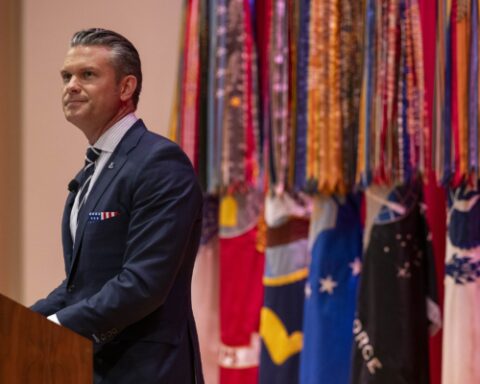

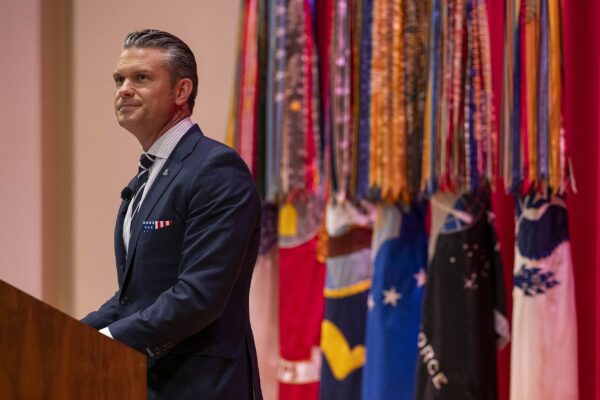
New polling data is raising serious questions about public confidence in Secretary of War Pete Hegseth as the United States presses forward in its ongoing conflict with Iran—an engagement that, for many Americans, appears far from settled.
According to CNN chief data analyst Harry Enten, Hegseth’s standing with the public is not just weak—it is historically low for a defense secretary at this stage of a military conflict. A Quinnipiac poll found Hegseth with a net approval rating of negative 15 points overall, including a steep negative 28-point rating among independents. A separate Yahoo survey painted an even more troubling picture, showing him 33 points underwater with independent voters.
Enten noted that these numbers stand in stark contrast to those of past defense leaders during the early days of major conflicts. During the Gulf War, former Defense Secretary Dick Cheney held a striking 62-point net positive rating. Similarly, Donald Rumsfeld enjoyed a 58-point advantage at the outset of the Iraq War, even though his popularity would later decline.
“This is completely different,” Enten explained, pointing to the gap. Compared to his predecessors, Hegseth’s numbers are not just lower—they are in an entirely different category. Where previous defense chiefs saw early surges in public support, Hegseth is facing a deficit that underscores a broader unease with the direction of the conflict.
Even more recent comparisons highlight the contrast. Former Defense Secretary James Mattis, who served during President Donald Trump’s first term, held a 37-point positive rating at a similar moment. Hegseth, by comparison, sits at negative 17 points in that same context, marking a more than 50-point swing.
Enten described the situation as unprecedented, noting that Hegseth is effectively “breaking records” for unpopularity at a time when defense leaders have traditionally enjoyed a rally-around-the-flag effect. In short, one of these things is not like the others.
The polling data appears to reflect a broader divide among Americans over the conflict itself. A Washington Post survey found that 52 percent of Americans oppose the strikes against Iran, while 39 percent support them. Meanwhile, a Fox News poll conducted earlier in March showed the country evenly split, with 50 percent approving of the war and 50 percent opposed.
That division may help explain why the usual boost in support for military leadership has failed to materialize. While past conflicts often generated early unity, this one appears to be prompting more skepticism from the outset.
The administration has maintained that Iran posed an imminent threat to the United States, but officials have yet to specify the exact nature of that threat. A letter sent by President Trump to Congress seeking to justify the war also did not detail a specific imminent danger.
At the same time, questions about the scope and duration of the conflict continue to linger. Hegseth said Thursday that there is no defined timeline for ending the war, leaving open the possibility of a prolonged engagement. The Pentagon is also seeking $200 billion in supplemental funding from Congress to sustain operations.
Taken together, the numbers and the uncertainty paint a sobering picture. While national security remains a top priority, the lack of clear answers and the growing price tag appear to be weighing on public confidence—raising concerns not just about leadership, but about the long-term trajectory of a conflict that shows no immediate end in sight.