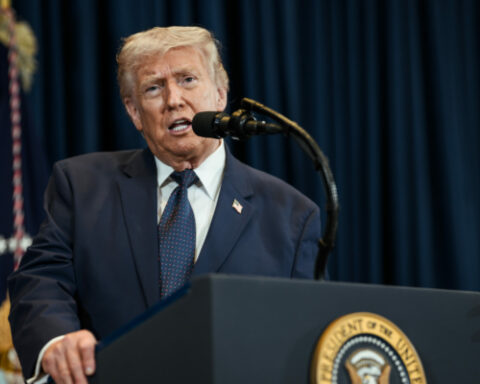

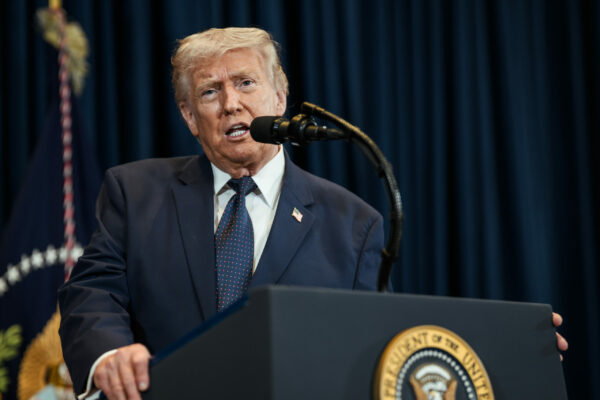
President Donald Trump delivered a pointed warning to Israeli Prime Minister Benjamin Netanyahu over the weekend, urging caution as tensions between Israel and Iran continue to simmer despite signs that both sides may be stepping back from the brink of a wider conflict.
According to comments Trump made to Axios reporter Barak Ravid, the president directly cautioned Netanyahu against further escalation, warning that Israel could find itself increasingly isolated if military operations continue to expand.
“I said, ‘Bibi, you better be careful, or you will be on your own very soon,’” Trump told Ravid.
The remarks offer a rare glimpse into the private discussions between the two longtime allies as the Middle East remains on edge following another round of missile exchanges and retaliatory strikes.
The latest tensions were triggered after Israel carried out attacks on Hezbollah targets in Beirut over the weekend. The strikes were followed by waves of Iranian missile attacks against Israel. Iran has repeatedly warned that additional Israeli attacks against Hezbollah in Lebanon could trigger a return to full-scale conflict.
The warning from Trump comes after a period of reported friction between the two leaders. Last week, according to reports, Trump and Netanyahu engaged in a heated phone call during which the president reportedly accused the Israeli leader of acting recklessly.
Axios reported that more recent conversations between the two leaders have been calmer and more constructive, even as major disagreements remain over how to respond to developments involving Iran and Hezbollah.
CNN correspondent Jeremy Diamond reported from Tel Aviv that Trump’s efforts to discourage additional Israeli military action initially met with limited success.
According to Diamond, Israel launched two separate waves of strikes inside Iran after Tehran fired multiple barrages of ballistic missiles. One round of attacks targeted military sites, while another struck a petrochemical facility.
Despite those operations, Trump reportedly continued pressing Netanyahu to avoid further escalation.
Diamond reported that Israel had planned additional rounds of attacks that would have been larger than those already carried out. However, according to sources cited by CNN, Netanyahu ultimately decided not to proceed with those strikes after discussions with the president.
Netanyahu later addressed the situation publicly, signaling that hostilities had temporarily subsided.
“At the moment, the fire has ceased, because after we struck the terror regime in Tehran, it stopped attacking us,” Netanyahu said. “If the terror regime in Iran makes the mistake of attacking us again, we will respond with force.”
While both governments have indicated they are not currently planning additional attacks, uncertainty continues to hang over the region.
Diamond noted that the possibility of renewed conflict remains significant, particularly because of statements coming from Iran’s military leadership.
According to Iran’s military command, any future Israeli strike against Iran—or additional Israeli attacks in southern Lebanon—would provoke a response more severe than the missile barrages launched during the most recent confrontation.
The statement represents a notable shift from previous Iranian warnings, which had focused specifically on Israeli strikes against Beirut.
Iran previously warned that attacks on the Lebanese capital would trigger retaliation, and following Israel’s strikes in Beirut, Iranian missile attacks soon followed.
Now, Iranian officials have broadened that warning to include southern Lebanon, a development that could complicate efforts to maintain calm because Israel has pledged to intensify operations against Hezbollah, whose stronghold is located in that region.
For the moment, daily life in Israel appears to be moving closer to normal. Restrictions across much of the country have been eased, and students are expected to return to school after classes were canceled.
Still, military forces throughout the region remain on heightened alert. The latest ceasefire may have paused the immediate fighting, but the continuing warnings, threats, and military preparations underscore how quickly the situation could change and how fragile peace can remain when rival powers continue to exchange ultimatums instead of lasting solutions.
[READ MORE: USDA Confirms Additional New World Screwworm Cases in Texas as State Ramps Up Response]