

A former senior Trump administration official is urging Americans to trust the president’s strategy in Iran, even as the conflict escalates and questions remain about whether diplomacy or continued military action will ultimately decide the outcome.
Robert Greenway, who served as a deputy assistant to the president and played a key role in shaping the Abraham Accords during President Donald Trump’s first term, appeared on Fox News with host Laura Ingraham and offered a blunt assessment of the current situation. Echoing Ingraham’s framing of the conflict, Greenway suggested Iran’s position is rapidly deteriorating and argued that time is working against the regime.
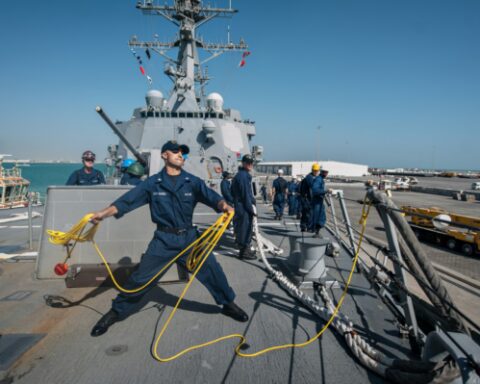
Ingraham pointed to the ongoing disconnect between Iran’s public statements and developments on the ground, noting that Tehran continues to deny any negotiations with the United States. At the same time, she cited U.S. Central Command figures indicating that more than 9,000 strikes have been carried out since Feb. 28, with over 140 Iranian naval vessels reportedly sunk or damaged.
Despite Iran’s denials, Ingraham argued that the regime is facing mounting pressure and suggested it has only a narrow window to change course. She maintained that the United States would ultimately prevail, framing the remaining uncertainty as a question of how much of Iran’s infrastructure would be left standing when the conflict ends.
Greenway did not dispute that outlook. Instead, he emphasized what he described as the overwhelming effectiveness of U.S. and Israeli military operations. According to him, the coalition is intercepting between 92 and 94 percent of what remains of Iran’s military capabilities, while U.S. strikes are achieving complete success. In his view, Iran has little ability to alter the trajectory of the conflict.
He also dismissed concerns raised about media coverage, responding to Ingraham’s criticism of major networks such as ABC, NBC, and CNN. Greenway said it was not surprising that parts of the media would appear sympathetic to adversaries, but he argued that the key indicators lie in the operational results on the battlefield rather than public narratives.
At the core of his message was a call for patience with the president’s approach. Greenway credited Trump with creating leverage by warning Iran that its power infrastructure could be targeted if it failed to change course within a set timeframe. He suggested that this pressure has already produced results, pointing to the possibility of negotiations despite Iran’s public denials.
Greenway also described Iran’s leadership as fractured and disorganized, arguing that internal divisions have left the regime struggling to respond effectively. According to him, this disarray is contributing to the broader sense that the conflict may be nearing a decisive phase.
Still, even as he praised the administration’s strategy as “masterful,” Greenway acknowledged that the likely endgame may not come through diplomacy. He indicated that a military resolution appears increasingly probable, suggesting that the trajectory of the conflict is pointing toward a conclusion shaped by force rather than negotiation.
That reality, while framed by supporters as evidence of strength and effectiveness, also underscores the broader stakes. As the conflict grinds on, the scale of destruction—measured in strikes, damaged infrastructure, and ongoing instability—raises difficult questions about the costs of achieving such an outcome.
For now, Trump allies are signaling confidence that the strategy is working. But with both sides digging in and the prospect of a military conclusion looming, the situation remains a stark reminder that even decisive victories can come with consequences that extend far beyond the battlefield.
[READ MORE: Deadly Runway Collision Shuts Down LaGuardia, Raises Questions About Safety]