

Authorities in Northern Ireland have taken a suspect into custody following a brazen car bomb attempt that, while ultimately unsuccessful in causing casualties, underscores the persistent threat of extremist violence in the region.
Counter-terror investigators with the Police Service of Northern Ireland (PSNI) arrested a 66-year-old man Tuesday morning in the Dunmurry area, just days after an explosive device detonated outside a local police station southwest of central Belfast. The arrest was carried out under the UK’s Terrorism Act, according to reports.
The incident unfolded Saturday night when a vehicle—allegedly commandeered in the Twinbrook neighborhood of west Belfast—was rigged with explosives. According to authorities, a delivery driver was forced at gunpoint to transport the bomb to Dunmurry Police Station. In what officials described as a critical act of courage, the driver managed to alert police, giving officers enough time to begin evacuating nearby homes and securing the area.
The bomb exploded outside the station as officers worked to clear the vicinity. Despite the severity of the situation, no injuries were reported—a fact many credit to both the driver’s quick thinking and the rapid response of law enforcement on the ground.
Responsibility for the attack was claimed by the New IRA, a dissident republican group. In a statement cited by The Irish News, the group said its intent was to target police officers as they exited the building. Authorities are now investigating the incident as attempted murder.
Body camera footage released in the aftermath captures the tense moments leading up to the explosion, showing a residential street before a sudden blast erupts in the distance. The footage highlights how close the attack came to endangering ordinary civilians, reinforcing concerns about the indiscriminate nature of such tactics.
Chief Constable Jon Boutcher did not mince words in his response, calling those behind the bombing “mindless thugs” and describing the attack as one that targeted the entire community. Speaking to BBC Radio Ulster, Boutcher also emphasized that the driver had been forced into the situation at gunpoint, further illustrating the coercive and reckless methods employed.
Northern Ireland’s political leadership responded with a unified message of condemnation. First Minister Michelle O’Neill urged the public and officials alike to focus on “strong condemnation, not political nonsense,” while British Prime Minister Keir Starmer also denounced the attack.
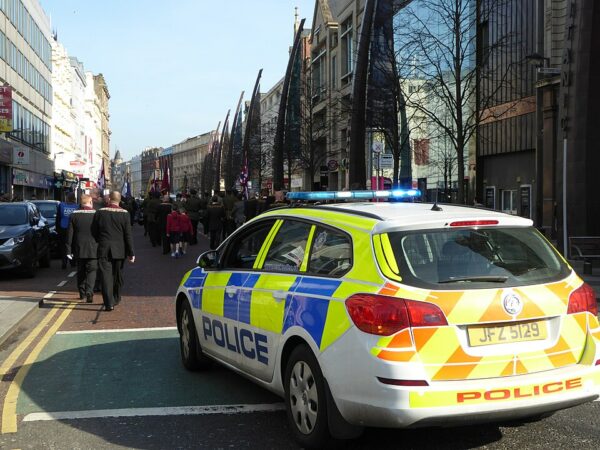
In response to the incident, the PSNI is increasing its security posture across the region. Assistant Chief Constable Davy Beck confirmed that additional checkpoints and patrols will be implemented, signaling a broader effort to deter further threats.
The attempted bombing follows a similar incident on March 30 in Lurgan, where a device targeting a police station failed to detonate. Together, the events point to a troubling pattern of continued militant activity, even as communities strive for stability.
Under the UK’s Terrorism Act of 2000, such acts—ranging from threats of violence to destruction of property—are treated as efforts to intimidate the public or influence government action. The law provides the framework under which authorities are now pursuing this case.
While the swift response prevented tragedy this time, the incident serves as a stark reminder of the dangers posed by extremist violence—and the heavy toll such threats continue to impose on communities seeking peace.
[READ MORE: Security Concerns Rise After WHCA Incident, Lawmakers Question Risks of High-Level Gatherings]