
The U.S. Air Force is set to purchase interceptor drones from a company partly owned by the two eldest sons of Donald Trump, according to a report from Bloomberg, marking a notable development at the intersection of defense policy, private industry, and political ties.
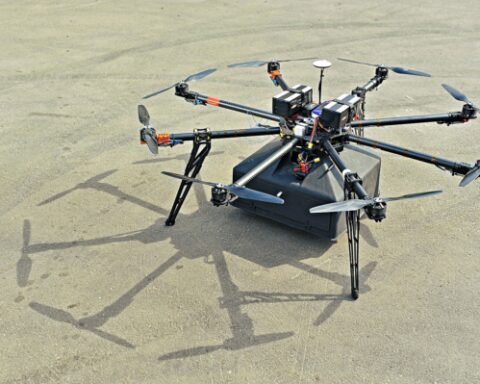
Donald Trump Jr. and Eric Trump are part owners of Powerus, a West Palm Beach, Florida-based firm that produces interceptor drones designed to destroy enemy drones mid-flight. The U.S. government will purchase an undisclosed number of these systems following a demonstration conducted in Arizona, according to Powerus president and co-founder Brett Velicovich.
The agreement represents the first known sale of this type of weapon by Powerus to the U.S. military. While the company has not disclosed financial details or the size of the contract, such arrangements are not uncommon as the military evaluates emerging technologies before committing to larger-scale adoption.
The move comes as the United States continues a broader effort to counter low-cost aerial threats, including Iranian attack drones, with more affordable interceptor systems rather than relying on significantly more expensive missile defenses. The U.S. Army has already deployed 10,000 AI-enabled Merops interceptor drones developed in Ukraine to the Middle East, highlighting the growing reliance on relatively inexpensive, fast-moving technologies in modern warfare.
Supporters of such efforts argue that matching cost-effective threats with similarly economical defenses is a practical necessity in today’s security landscape. At the same time, the rapid expansion of drone warfare has raised broader concerns about how conflicts are conducted, with some critics warning that the increasing reliance on automated systems could further normalize prolonged, lower-cost engagements abroad.
The involvement of the Trump family in a defense contractor, however, has drawn criticism from some ethics observers. Kathleen Clark of Washington University School of Law previously raised concerns about potential conflicts of interest, telling the Associated Press that such arrangements could create pressure on government decision-makers.
“It’s corruption,” Clark said, arguing that officials might feel compelled to steer contracts in ways that benefit the president’s family.
The issue adds another layer of complexity to an already contentious debate over the role of private companies in national defense, particularly when political connections are involved. While no details have been provided about how the contract was awarded, the optics of such deals often draw heightened scrutiny in Washington.
Meanwhile, Eric Trump has continued to play an active role in other ventures tied to defense and emerging technologies. Last week, he appeared on Fox Business following a $24 million Department of Defense contract awarded to Foundation Industries, where he serves as an adviser and investor, to develop humanoid robots for battlefield use.
“We have to win this race,” Eric Trump said during the appearance. “We have to win a lot of races.”
He also referenced his involvement in the cryptocurrency sector, pointing to World Liberty Financial, a company in which the Trump family holds a majority stake. That venture is currently facing legal challenges, as billionaire investor Justin Sun has filed a lawsuit alleging breach of contract.
As the Air Force moves forward with its latest drone acquisition, the deal underscores both the evolving nature of modern defense strategies and the persistent questions that arise when business, politics, and military priorities intersect.