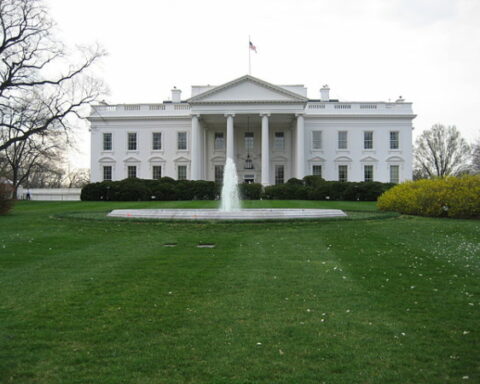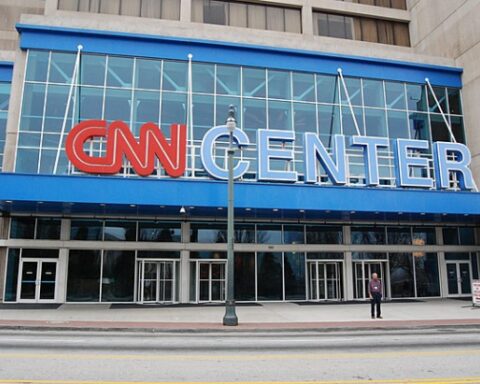


White House press secretary Karoline Leavitt forcefully rejected a CNN report Friday that questioned the Trump administration’s preparation for Iran’s decision to close the Strait of Hormuz during the ongoing U.S. military operation.
Leavitt blasted the report as “PREPOSTEROUS,” accusing the network of relying on anonymous sources to undermine the administration while American officials and military personnel remain engaged in the conflict.
The CNN story, citing “multiple sources familiar with the matter,” claimed that officials within the Pentagon and the National Security Council underestimated the likelihood that Iran would attempt to shut down the critical shipping lane following U.S. strikes.
According to the report, administration officials acknowledged during recent classified briefings with lawmakers that they had not specifically planned for the possibility that Tehran would close the strait in retaliation. The article stated that some officials believed Iran would avoid such a move because it could hurt its own economy more than it would harm the United States.
CNN reporters Zachary Cohen, Phil Mattingly, Kevin Liptak and Kylie Atwood wrote that officials believed the threat was unlikely partly because Iran had issued similar warnings in the past but had not followed through after U.S. strikes on Iranian nuclear facilities last summer.
Top administration officials quickly pushed back against the report.
Defense Secretary Pete Hegseth dismissed the claim during a Pentagon press briefing Friday morning, calling the reporting “patently ridiculous.”
Leavitt soon followed with an extended response on social media, accusing the network of spreading misinformation.
“This story is 100% FAKE NEWS,” she wrote in a post on X. “CNN decided to run this garbage based on three anonymous ‘sources familiar with discussions.’”
Leavitt said the administration’s top national security officials had already disputed the claim. She noted that she, the defense secretary, the secretary of state and several lawmakers who attended the classified briefing have all publicly rejected the report’s characterization of events.
In her statement, Leavitt argued that the possibility of Iran attempting to close the Strait of Hormuz has long been understood by U.S. military planners.
“The Pentagon has been planning for Iran’s desperate and reckless closure of the Strait of Hormuz for decades,” she wrote, adding that the issue was part of the Trump administration’s planning well before the launch of Operation Epic Fury.
Leavitt also rejected the suggestion that senior defense leaders were caught off guard by the development.
“The idea that Chairman Cain and Secretary Hegseth weren’t prepared for this possibility is PREPOSTEROUS,” she wrote, saying President Trump had been fully briefed on the issue.
According to Leavitt, a key objective of the ongoing operation is to weaken Iran’s ability to threaten international shipping routes. She pointed to efforts aimed at destroying elements of Iran’s navy, missile systems and drone production infrastructure.
The administration argues that those actions are intended to prevent Iran from interfering with the global flow of energy through the Strait of Hormuz, one of the world’s most important maritime corridors.
“President Trump will not allow rogue Iranian terrorists to stop the freedom of navigation and the free flow of energy,” Leavitt said.
At the same time, the exchange highlights the increasingly heated battle between the administration and major media outlets as the conflict continues to unfold.
Leavitt accused news organizations of attempting to undermine the president and the U.S. military during an active operation.
“The Fake News is working overtime to discredit President Trump, his Administration, and our U.S. Military,” she wrote, adding that officials are working around the clock to address what they describe as threats from the Iranian regime.
Leavitt also shared statements from two Republican senators who disputed the suggestion that lawmakers had been told about any planning oversight during recent briefings.
As tensions remain high in the region and the stakes of the conflict continue to ripple across global energy markets, the dispute underscores how battles over information and narrative have become a central part of modern warfare alongside events unfolding on the ground.